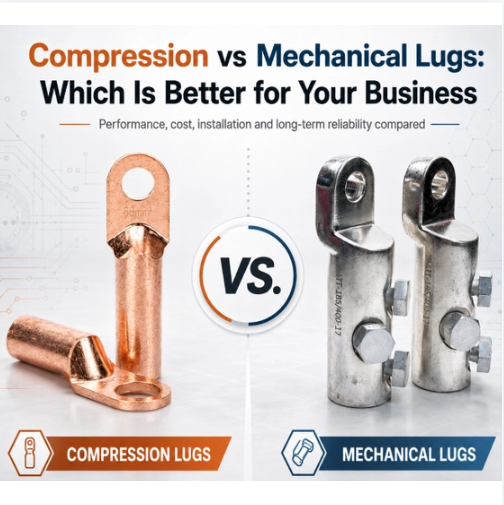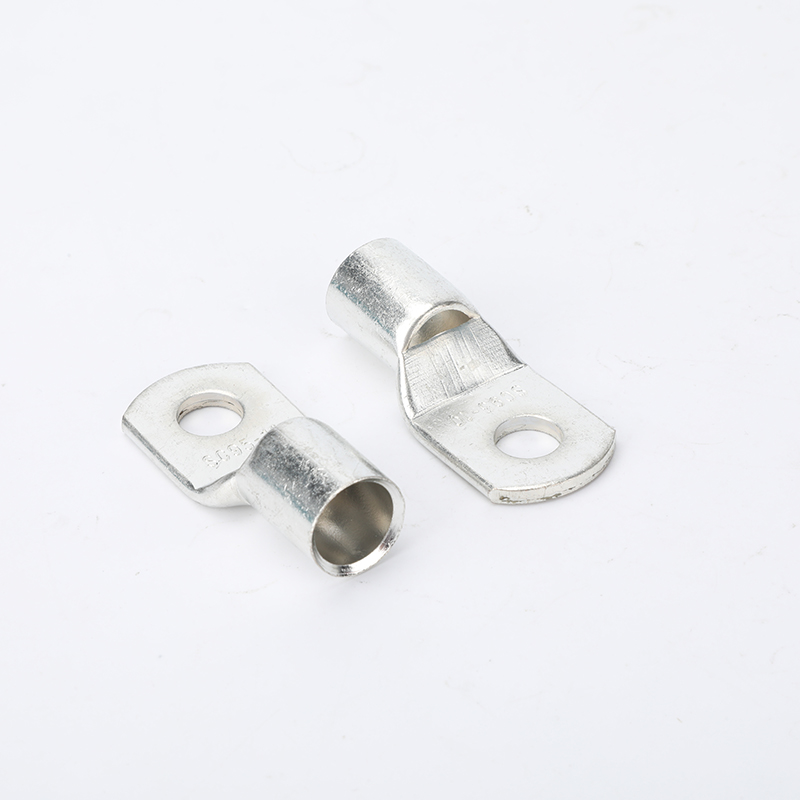
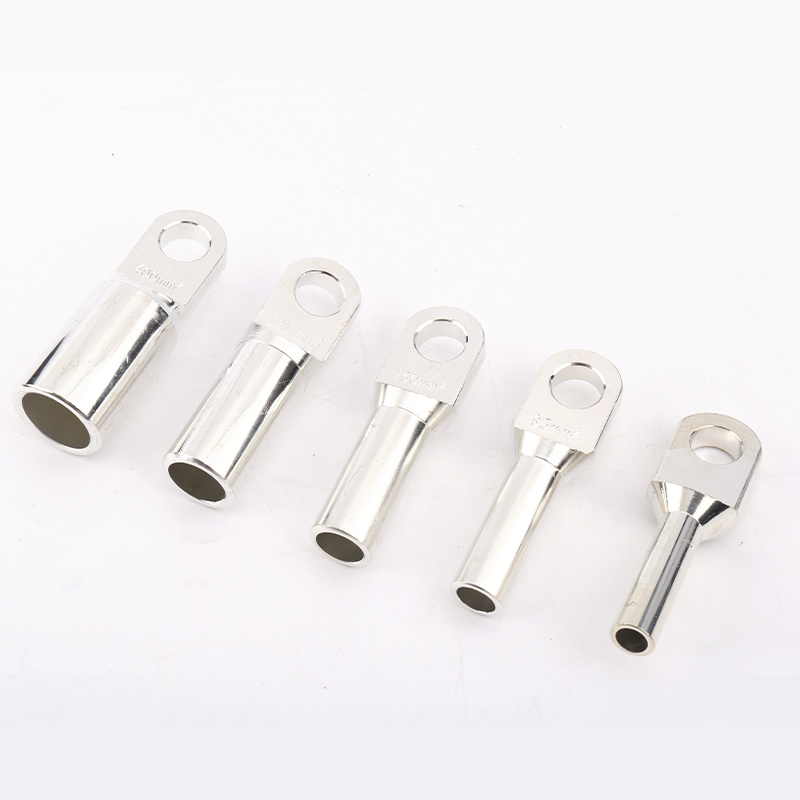
In electrical and industrial applications, creating a secure, low-resistance connection is not just about the wire—it’s about the termination. Copper lugs, also known as cable terminals or connectors, are essential components that bridge the gap between a cable and a device, busbar, or another cable. Their primary function is to ensure a reliable electrical and mechanical connection that maximizes conductivity and withstands vibration, thermal cycling, and environmental stress. However, with several shapes available, selecting the wrong type can lead to installation headaches, poor performance, or safety risks. This guide will explain the three main shapes—Ring, Fork, and Pin—and provide a clear framework for choosing the right one for your specific project. At Enviele, we supply a full range of high-quality, precision-engineered copper lugs to meet the demands of any electrical installation.
Before diving into shapes, it’s crucial to understand why a proper lug is necessary. Simply stripping a wire and fastening it under a screw terminal is unreliable. Over time, stranded wires can splay, individual strands can break, and the connection can loosen, leading to increased resistance, heat generation, and potential failure. A copper lug solves this by providing a permanent, crimped termination that consolidates all wire strands into a single, robust conductor. The shaped tongue of the lug then offers a standardized, secure interface for bolting. Made from high-conductivity copper (often tin-plated to prevent oxidation), lugs ensure optimal current flow, mechanical strength, and long-term durability, making them indispensable in panels, machinery, renewable energy systems, and power distribution.
ODT series copper terminal lugs for European 4 1
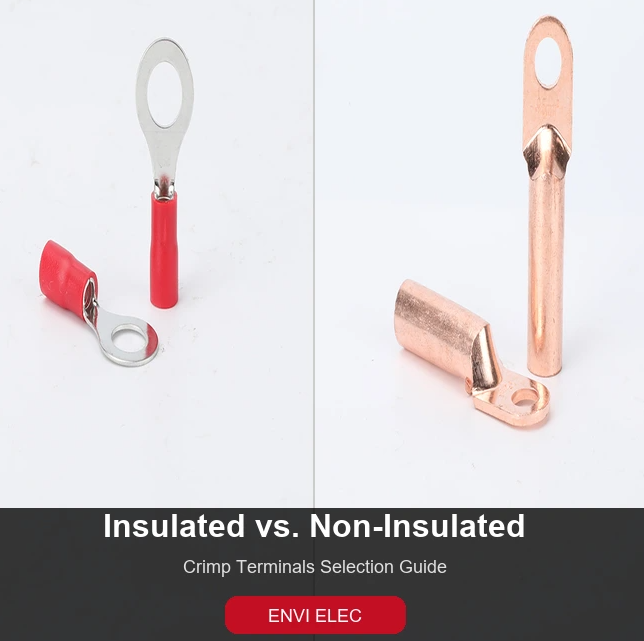
The ring lug, characterized by a complete, closed circle at the termination end, is designed for maximum security and reliability. It is installed by sliding the ring over a stud or bolt and securing it with a nut. Once tightened, the connection is virtually impossible to disconnect accidentally, as the lug cannot slip off without the nut being fully removed. This makes ring lugs the preferred choice for permanent, high-vibration, and critical power applications. They are standard in electrical panels (for grounding and busbar connections), industrial motor terminations, and automotive battery terminals. The full-circle design distributes clamping force evenly and provides excellent surface contact. When selecting a ring lug, pay attention to the inner diameter (ID), which must match the stud size, and the ring thickness, which affects its mechanical strength.
Fork lugs, identifiable by their U-shaped or two-pronged “forked” end, are designed for ease of installation and removal. The open end allows the lug to be slid under the head of a screw or nut without completely disassembling the terminal. This feature makes them ideal for applications requiring frequent service, inspection, or reconfiguration. They are commonly used in control panels, appliance wiring, and HVAC systems where components may need to be swapped or tested. While convenient, the open design theoretically offers slightly less contact area and security than a ring lug, especially under severe vibration. Therefore, they are often chosen for lower-vibration environments or where serviceability is a higher priority than a “set-and-forget” permanent install. For critical connections, a locking washer is recommended to prevent the fork from slipping off.
Pin lugs terminate in a solid, cylindrical pin. This shape is specifically engineered for insertion into female connectors, terminal blocks, or plug-in sockets. They are the solution when a wire needs to interface with a modular connector system, such as in industrial automation (PLC wiring), telecommunications, or certain types of switchgear and circuit breakers. The pin provides a precise, guided mating action, ensuring proper alignment. Pin lugs come in various pin diameters and lengths to match specific connector specifications. They excel in creating organized, high-density wiring harnesses where multiple connections must be made quickly and accurately in tight spaces. Their use is often dictated by the design of the receiving equipment rather than being a field choice for standard studs.
The table below provides a clear, side-by-side comparison to help you quickly identify the right lug shape for your task.
| Feature | Ring Lug | Fork (Spade) Lug | Pin Lug |
|---|---|---|---|
| Connection Security | Highest. Closed loop prevents accidental disconnection. | Good. Can be disconnected without full nut removal; may need a lock washer for high vibration. | Varies. Secure once inserted into mating connector; not for direct bolt-on. |
| Ease of Installation/Removal | Lower. Requires complete removal of the nut to install or disconnect. | Highest. Can be slid on/off a loosened terminal quickly. | Moderate. Requires precise mating with a corresponding socket. |
| Best For Applications | Permanent power connections, grounding, high-vibration environments (panels, motors, batteries). | Serviceable connections in control cabinets, appliances, test equipment, HVAC. | Plug-in systems, modular electronics, terminal blocks, industrial automation connectors. |
| Typical Use Case | Bolting a cable permanently to a main breaker terminal or equipment ground bar. | Connecting a control wire to a relay or contactor terminal that may need future service. | Inserting a wire into a multi-pin PLC I/O module or a specific type of circuit breaker. |
| Key Selection Metric | Inner Diameter (ID) – Must match the stud size exactly. | Prong Width & Thickness – Must fit under the terminal hardware. | Pin Diameter & Length – Must match the specifications of the female connector. |
Follow this logical process to select the optimal lug shape:
Analyze the Terminal Hardware: Look at the connection point on the device. Is it a stud with a nut? (Choose Ring or Fork). Is it a screw terminal with a raised lip? (Fork is usually best). Is it a socket or female connector? (You likely need a Pin lug).
Evaluate Service Requirements: Ask: “Will this connection ever need to be disconnected for maintenance or testing during its service life?” If NO, a Ring lug offers the most robust, permanent solution. If YES, a Fork lug provides the necessary convenience.
Consider the Operating Environment: For locations with high vibration or movement (e.g., engines, machinery, vehicles), the secure, closed design of a Ring lug is strongly preferred to prevent loosening.
Match Specifications Precisely: Once you’ve chosen the shape, the mechanical fit is critical. For Ring and Fork lugs, verify the stud/screw size and the lug’s bore or fork dimensions. For Pin lugs, the connector datasheet is your essential guide. Also, ensure the wire range (AWG/mm²) of the lug barrel matches your cable size.
Choosing the correct copper lug shape—Ring, Fork, or Pin—is a simple yet vital step in ensuring a safe, reliable, and long-lasting electrical connection. Match the ring lug for permanent, high-security points; select the fork lug for serviceable connections; and use the pin lug for specialized plug-in systems. Always prioritize precise mechanical and electrical specifications over convenience. For a comprehensive selection of certified, high-performance copper lugs in all standard shapes and sizes, explore Enviele’s range today. Contact our technical support team for expert guidance tailored to your project’s specific requirements.
Q: Can I use a fork lug instead of a ring lug if it fits?
A: It is not recommended for critical or high-vibration applications. The ring lug provides a more secure, fail-safe connection. Use a fork lug only where its serviceability is a defined need.
Q: How do I attach (crimp) a lug to a cable?
A: You must use a calibrated crimping tool matched to the lug’s size and wire range. A proper crimp deforms the lug barrel and wire into a single, cold-welded unit. Never use only a hammer or pliers.
Q: Why are most copper lugs tin-plated?
A: Tin plating prevents the bare copper from oxidizing (tarnishing) over time. Oxidation increases resistance and heat. The tin surface stays clean and ensures a low-resistance connection.
Q: What is the difference between a ‘Fork’ and a ‘Spade’ lug?
A: The terms are often used interchangeably. Technically, a spade lug may have a flatter, wider shape, while a fork lug has more pronounced prongs, but the function is identical.
Q: Why choose Enviele for copper lugs?
A: Enviele provides lugs manufactured from high-conductivity copper with precise, consistent dimensions and secure crimp barrels. Our products meet industry standards, ensuring safety, reliability, and optimal performance in your electrical systems.

With extensive experience, excellent craftsmanship, and superior customer service, we meet various technical requirements to satisfy our customers and have gained widespread