
When embarking on an electrical project, the focus is often on the gauge of the wire or the capacity of the battery. However, the true longevity of an electrical system often depends on a much smaller detail: the insulation material of your ring terminals. At Envi Electric (enviele.com), we encounter many professionals and DIY enthusiasts who find themselves at a crossroads between two industry standards: Nylon and Vinyl.
While both serve the primary purpose of preventing accidental contact and short circuits, they behave very differently under stress, heat, and chemical exposure. Selecting the wrong insulation can lead to brittle connections that crack over time or terminals that fail in high-vibration environments. In this comprehensive guide, we will break down the structural and functional differences between Nylon and Vinyl insulated ring terminals to help you make the best choice for your specific application.
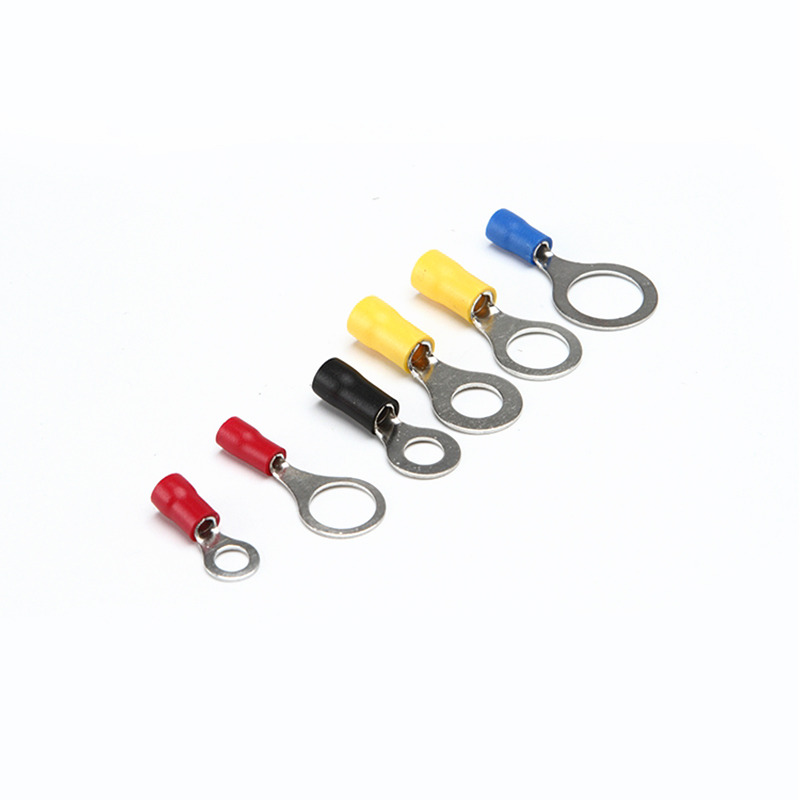
Vinyl, technically known as Polyvinyl Chloride (PVC), is the most common insulation material found in the electrical market today. It is favored primarily for its cost-effectiveness and ease of use in controlled environments. Vinyl terminals are characterized by their opaque, bright colors (red, blue, or yellow) and a slightly rigid feel.
These terminals are ideally suited for general-purpose applications where the environment is stable. For example, if you are wiring a home theater system or a simple indoor control panel, vinyl ring terminals offer a reliable and economical solution. Because the material is relatively inexpensive to manufacture, it is the go-to choice for high-volume projects where budget is a primary concern. However, vinyl has limitations; it can become brittle when exposed to extreme cold and may lose its shape or melt in high-heat scenarios. At Envi Electric, we recommend vinyl for interior applications where moisture and mechanical stress are minimal.
RV insulated spade terminal 3
Nylon insulation is widely considered the “premium” choice for professional electrical work. Unlike the opaque look of vinyl, nylon is often translucent, allowing a technician to see the wire through the insulation. This transparency is a significant safety feature, as it allows for a visual inspection to ensure the wire is fully seated within the barrel before and after crimping.
The standout feature of nylon is its mechanical resilience. Nylon is a much more flexible and “tougher” polymer than vinyl. When you crimp a nylon terminal, the insulation is designed to deform without fracturing. It possesses a “memory” that allows it to grip the wire’s outer jacket, providing superior strain relief. This makes nylon the preferred choice for industrial machinery, automotive engine bays, and aerospace applications where vibration is constant. If a terminal needs to withstand the test of time in a harsh environment, nylon is almost always the superior candidate.
To help visualize the technical differences, the following table compares the physical and chemical properties of these two common insulation types.
| Feature | Vinyl (PVC) Insulated | Nylon Insulated |
| Appearance | Opaque, Solid Colors | Translucent / Semi-Transparent |
| Flexibility | Rigid; may crack if over-crimped | Flexible; resists splitting |
| Temperature Range | -40°C to 105°C (140°F) | -40°C to 105°C (221°F) |
| Chemical Resistance | Moderate | High (Resists oils, fuels, solvents) |
| Strain Relief | Basic | Superior (Gripping action) |
| Cost | Economical | Higher |
| Best Environment | Indoor, Dry, Stationary | Automotive, Industrial, Marine |
As indicated in the table, while both materials share a similar upper-temperature rating of roughly 105°C, their behavior at those limits differs. Vinyl tends to soften significantly as it approaches its heat limit, which can lead to the insulation thinning out under pressure. Nylon, conversely, maintains its structural integrity much better under thermal stress. This stability is why Envi Electric suggests nylon for under-the-hood automotive wiring where temperatures fluctuate rapidly.
Furthermore, the flexibility factor cannot be overstated. When a vinyl terminal is crimped, the force of the tool can sometimes cause the plastic to “stress whiten” or even develop hairline fractures. These cracks can allow moisture to enter the barrel, leading to corrosion. Nylon’s inherent elasticity allows it to flow with the metal of the barrel during the crimp, ensuring the insulation remains a solid, protective barrier.
Another critical takeaway from our comparison data is chemical resistance. In an industrial or automotive setting, terminals are frequently exposed to grease, gasoline, hydraulic fluid, and various cleaning solvents. Vinyl insulation can react with certain hydrocarbons, causing the plastic to become “gummy” or dissolve over time.
Nylon is naturally resistant to a much wider array of chemicals. This chemical inertness ensures that the insulation won’t degrade just because it came into contact with a leaky gasket or a spilled cleaning agent. For our customers at enviele.com working in factory maintenance or automotive repair, we emphasize that the slightly higher upfront cost of nylon is a small price to pay for the prevention of future chemical-induced failures.
One of the most overlooked aspects of terminal selection is “strain relief.” In a perfect world, wires would never be pulled or vibrated. In reality, wires are often subjected to mechanical tension. Because nylon is more pliable, it can be manufactured with a flared entry or an extra brass sleeve (often called a “double crimp” terminal) that grips the wire’s insulation.
This extra grip means that if the wire is tugged, the force is distributed across the insulation rather than being concentrated entirely on the copper strands inside the crimp. Vinyl terminals generally lack this advanced gripping capability. Consequently, in high-vibration environments—like a heavy-duty diesel engine or a manufacturing conveyor belt—a vinyl connection is much more likely to suffer from “metal fatigue” where the wire strands eventually snap at the point of the crimp.
If you are repairing a household appliance, wiring a 12V LED strip in your kitchen, or working on a hobbyist electronics project in your garage, Vinyl is perfectly adequate. It provides the necessary protection at a lower cost, and because these items are usually stationary and protected from the elements, the benefits of nylon would be underutilized.
If you are installing a dual-battery system in a 4×4 or wiring a bilge pump on a boat, Nylon (or ideally Heat Shrink, which is a specialized form of nylon/polyolefin) is the clear winner. The combination of vibration resistance and the ability to withstand fuel vapors makes it a safety requirement rather than a luxury.
For builders of industrial control panels, nylon is often the standard. The ability to visually confirm the wire placement through the translucent insulation speeds up the quality control process and reduces the likelihood of “cold joints” or loose wires passing inspection. At Envi Electric, we supply bulk nylon terminals to contractors who prioritize these efficiency and safety gains.
At enviele.com, we don’t just sell parts; we provide components that meet the highest industrial standards. Whether you choose our vinyl or nylon ring terminals, you are receiving products made from high-grade, tinned copper. Our terminals feature:
Brazed Seams: Our barrels are welded shut, preventing them from splitting during the crimping process—a common failure point in cheap, “butted seam” terminals.
Precision Sizing: Our terminals are manufactured to strict tolerances to ensure they fit the AWG sizes they are rated for perfectly.
UL Compliance: We prioritize safety and reliability, ensuring our products can handle the electrical loads they are designed for.
Yes, most standard crimping tools work for both. However, because nylon is tougher, a ratcheting crimper is highly recommended. It ensures a consistent, high-pressure cycle that properly deforms the nylon and the copper barrel without the risk of an under-crimp.
No, neither standard nylon nor vinyl is waterproof. They protect against accidental contact and splashes, but moisture can still enter the ends of the barrel. For fully waterproof connections, you should use Heat Shrink ring terminals available at Envi Electric.
Nylon is a more complex polymer to manufacture and has better physical properties, such as a higher melting point and better chemical resistance. The added cost reflects the increased durability and the safety benefit of its translucent design.
The easiest way is transparency. Vinyl is completely solid and opaque (you cannot see through it). Nylon is semi-transparent or translucent; if you hold it up to the light, you can usually see the shadow of the metal barrel inside.
No, both follow the same industry-standard color coding for wire gauges: Red (22-16 AWG), Blue (16-14 AWG), and Yellow (12-10 AWG). The color tells you the size, while the material (nylon vs. vinyl) tells you the performance level.
The choice between nylon and vinyl insulated ring terminals ultimately comes down to your project’s environment and budget. Vinyl is the economical king of the indoor, stationary world, while nylon is the resilient champion of the industrial and automotive sectors. By understanding the mechanical and chemical advantages of nylon—specifically its transparency, flexibility, and strain relief—you can build electrical systems that are not only functional but exceptionally durable.
Vinyl terminals are cost-effective for basic indoor use, while Nylon terminals offer superior durability, chemical resistance, and vibration protection for professional, automotive, and industrial applications. Choosing the right material ensures a safe, long-lasting connection.
Take the next step in professional wiring! Explore our full inventory of high-quality Nylon and Vinyl ring terminals at Envi Electric. Ensure your next project is backed by the best connectors in the industry—shop now for reliable power solutions!

With extensive experience, excellent craftsmanship, and superior customer service, we meet various technical requirements to satisfy our customers and have gained widespread