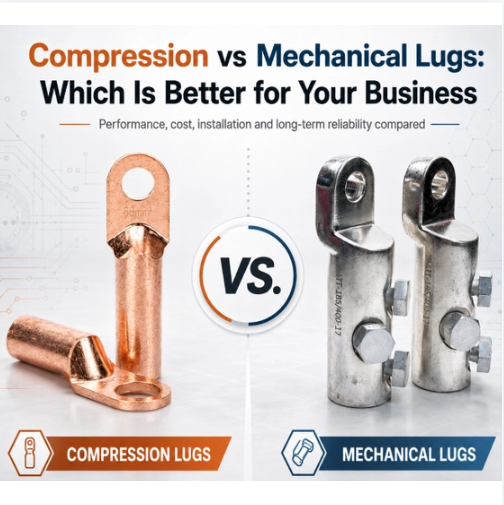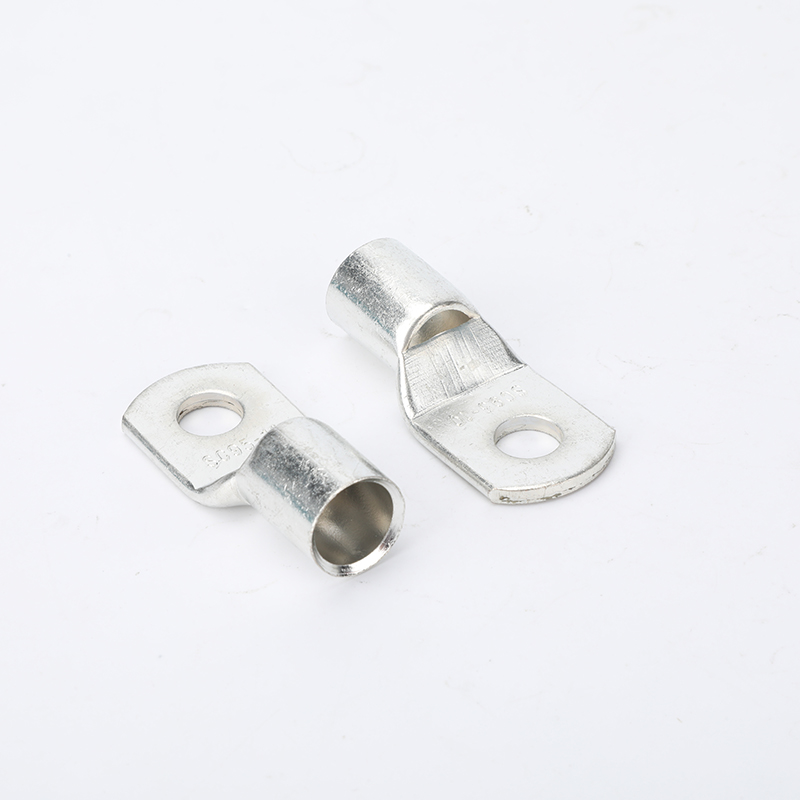
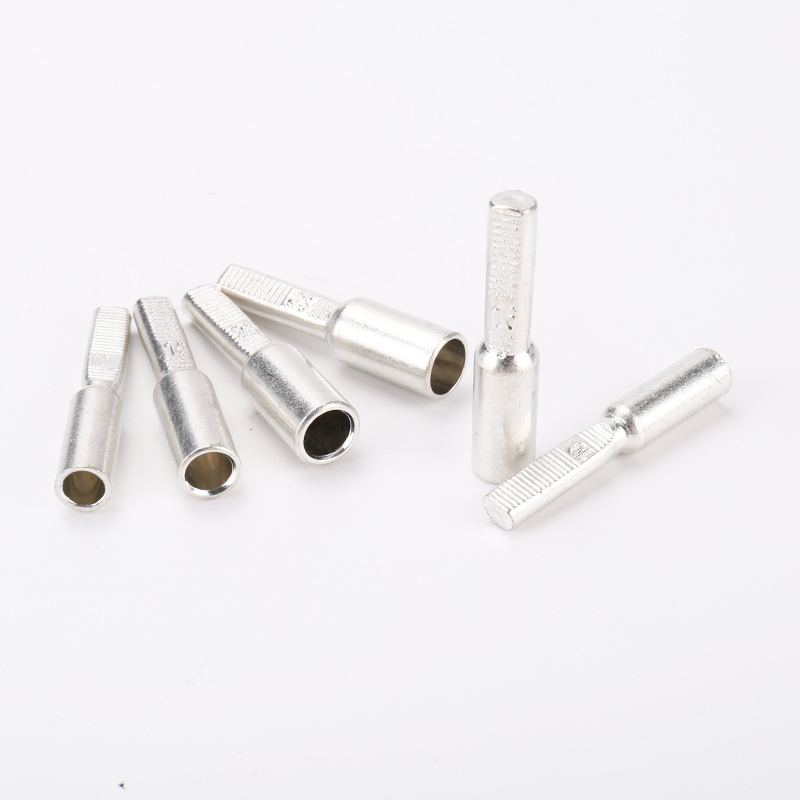
Choosing between tinned copper and bare copper lugs for breaker terminals affects long‑term reliability, safety, and code compliance. Tinned copper lugs offer superior corrosion resistance for demanding environments, while bare copper lugs provide slightly higher initial conductivity at lower cost. This guide compares both types to help you make an informed decision for every installation.
A circuit breaker terminal is only as reliable as the lug attached to it. The wrong lug material can lead to gradual resistance increase, overheating, voltage drop, and eventually terminal failure. Whether you are wiring an industrial distribution panel, a marine electrical system, or a standard indoor switchroom, the material of your copper lug directly determines how long that connection will perform safely.
Both tinned and bare copper lugs begin as high‑purity electrolytic copper (EC grade, ≥99.9% conductivity). The sole difference is a thin tin coating applied to tinned copper lugs via electroplating or hot‑dip tinning, typically 3–5 micrometres thick. That single layer transforms performance in corrosion‑prone environments while bare copper remains suitable for clean, dry, indoor applications.
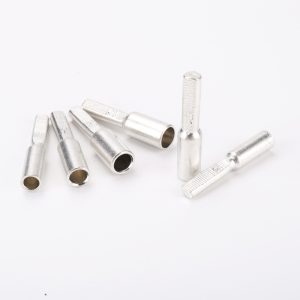
Bare copper lugs are chemically active when exposed to air and moisture. They quickly form a dark oxide layer—copper oxide (CuO/Cu₂O)—that increases contact resistance over time. In marine, coastal, or high‑humidity settings, oxidation accelerates dramatically, leading to green copper carbonate (basic copper carbonate) that degrades both electrical and mechanical integrity.
Tinned copper lugs solve this problem through a protective tin barrier. The tin coating acts as a physical shield that prevents oxygen, water, and salt from reaching the copper substrate. At room temperature, tin forms a dense SnO₂ film that further resists oxidation. This makes tinned lugs essential for marine vessels, offshore platforms, coastal substations, and solar PV installations left exposed to sun and rain year after year.
Surface oxidation accelerates rapidly in humid air. Tinned copper lugs maintain stable performance in coastal and industrial zones, while bare copper lugs degrade faster in harsh conditions.
Bare copper offers the highest initial conductivity—approximately 100% IACS (International Annealed Copper Standard). With no intervening layer, electrons flow freely at the point of installation. However, this advantage is short‑lived in any environment that contains moisture or airborne contaminants. As oxidation builds, contact resistance rises, often exceeding the initial conductivity advantage within months of service–.
Tinned copper lugs have slightly lower initial conductivity—tin itself carries about 15.6% IACS—but this difference is minimal and does not significantly impact real‑world performance. More importantly, the tin coating prevents oxide formation, keeping contact resistance stable for the life of the connection. In long‑term operation, stable conductivity from tinned lugs often outperforms bare copper, especially in outdoor or exposed installations.
For engineers and procurement decision‑makers, prioritize long‑term resistance stability over initial conductivity specifications. A connection that remains reliable after five years is more valuable than one that starts slightly better but degrades after two.
Upfront cost favours bare copper lugs—they are typically 5–15% less expensive than their tinned counterparts–. For large-volume orders on tightly budgeted projects, that difference can be significant. However, upfront cost tells only half the story.
Total cost of ownership must account for inspection frequency, maintenance requirements, and replacement risk. Bare copper lugs in harsh environments may require frequent inspection and re‑termination, while tinned copper lugs in the same setting can last multiple years with minimal degradation. A coastal installation may see bare copper lugs fail within 1–2 years, while tinned lugs continue performing for five years or more. Lower upfront cost rarely justifies early replacement and system downtime. For applications where long‑term reliability matters more than initial price, tinned copper lugs deliver superior lifecycle value.
The environment dictates the correct choice. Bare copper lugs are best suited for clean, dry indoor applications such as climate‑controlled switchrooms, automotive interiors, and battery rooms where humidity is controlled–. In these settings, bare copper performs reliably at lower cost and requires no corrosion protection.
Tinned copper lugs are the default choice for anything outdoors, humidity‑exposed, or chemically aggressive. Specific applications that demand tinned lugs include:
Marine electrical systems: Salt spray is one of the most aggressive corrosive forces. Bare copper corrodes rapidly on boats, while tinned marine‑grade lugs resist saltwater attack.
Solar PV installations: Exposed to heat, rain, direct UV, and temperature swings, outdoor solar connections require tinned lugs to prevent oxidation and maintain low resistance.
Industrial plants: Chemical exposure, dust, and humidity degrade bare copper quickly; tinned lugs maintain performance.
Coastal and offshore wind farms: Salt‑laden air demands tinned lugs for long service life.
If uncertain about environmental exposure, default to tinned copper lugs. They reduce risk in most industrial use cases and eliminate corrosion as a potential failure mode.
For installations requiring third‑party validation, verifying that lugs meet recognised international standards is critical. Our tinned copper lugs are manufactured in accordance with IEC 61238‑1 (the international benchmark for compression and mechanical connectors for power cables) and GB/T 14315‑2008 (the Chinese national standard for copper terminals and connectors). Additional compliance includes RoHS for environmental safety.Specifying lugs that meet these standards ensures mechanical strength, electrical continuity, and thermal cycle performance are validated before installation, reducing project risk and inspection failures.
When selecting lugs for mixed‑metal applications, pay close attention to markings and compatibility. A lug marked “AL9CU” or “CU9AL” indicates the lug is listed for both copper and aluminium conductors and carries a 90°C temperature rating . If a terminal or lug is listed for copper only, then only copper conductors shall be installed . Mixing copper and aluminium conductors in the same terminal without a dual‑rated connector creates galvanic corrosion that degrades the joint over time—a design error that is entirely preventable by selecting the correctly rated components.
Tinned copper lugs offer superior solderability. The tin layer has excellent compatibility with solder materials. During soldering, the tin melts before the copper, forming a uniform alloy layer with full, reliable solder joints suitable for automated wave soldering . Additionally, tin plating can improve conductor flexibility—the tin layer has a mild lubricating effect that reduces the risk of conductor breakage during wire twisting and winding processes . For applications requiring soldered connections, tinned lugs are significantly easier to work with than bare copper, which may require surface cleaning before soldering if stored long enough to oxidise .
For crimped connections, both lug types require the same installation technique—properly matched die sets, calibrated tools, and correct barrel fit. However, tinned lugs provide the added benefit of maintaining a clean, low‑resistance contact surface even if the crimped area is later exposed to moisture.
What happens if I use bare copper lugs outdoors in a coastal area?
Oxidation accelerates in salt‑laden air, leading to green copper carbonate formation, increased contact resistance, voltage drop, and eventual terminal failure—often within 1–2 years .
Are tinned copper lugs completely corrosion‑proof?
No material is entirely corrosion‑proof forever, but tinned copper lugs resist corrosion significantly better than bare copper and maintain stable performance for many years in demanding environments .
Will tinning reduce electrical conductivity enough to matter?
The tin layer reduces conductivity by about 3–5%, but the difference is minimal in real‑world applications and far outweighed by the long‑term stability tinning provides .
What standards should quality copper lugs meet?
Quality copper lugs should comply with IEC 61238‑1 and GB/T 14315‑2008, and meet RoHS environmental requirements for safety and reliability.
The difference between tinned copper and bare copper lugs for breaker terminals comes down to one question: how demanding is your environment? Bare copper lugs offer maximum initial conductivity at lowest upfront cost—ideal for clean, dry indoor applications. Tinned copper lugs provide superior corrosion resistance, stable long‑term conductivity, and better solderability—necessary for outdoor, marine, coastal, solar, and industrial installations. While tinned lugs carry a higher initial price, their lifecycle value in any environment with moisture or contaminants is unquestionably superior. When in doubt, selecting tinned copper lugs eliminates corrosion as a risk factor and ensures your breaker terminations remain reliable for years to come.
For tinned and bare copper lugs that meet IEC 61238‑1 and GB/T 14315‑2008 standards, trust Envi Electric. Visit Our Web today to explore our full range of copper compression lugs and terminals—or contact our technical team for application‑specific recommendations.

With extensive experience, excellent craftsmanship, and superior customer service, we meet various technical requirements to satisfy our customers and have gained widespread