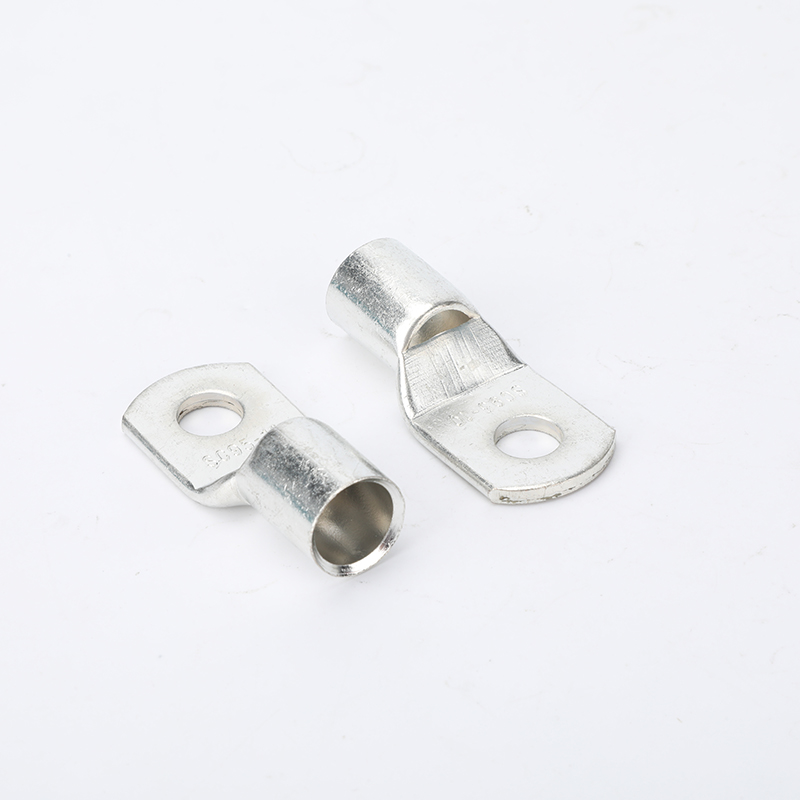


Selecting the right copper lug for circuit breakers is essential for safety, code compliance, and long-term system reliability. With the wrong choice, professionals risk overheating, voltage drop, and failed inspections in residential, commercial, and industrial installations. This guide covers five proven steps to select the correct copper cable lug every time, from wire gauge matching to UL certification, helping you build secure connections that last.
More than just a connector, the copper lug defines the safety and efficiency of the entire electrical system. A poorly chosen or improperly installed copper compression lug can lead to increased resistance, excessive heating, vibration loosening, and even catastrophic connection failure. Whether you are wiring a main service entrance, a high-current industrial panel, or a renewable energy system, proper copper lug selection ensures reliable power delivery and full compliance with NEC requirements.
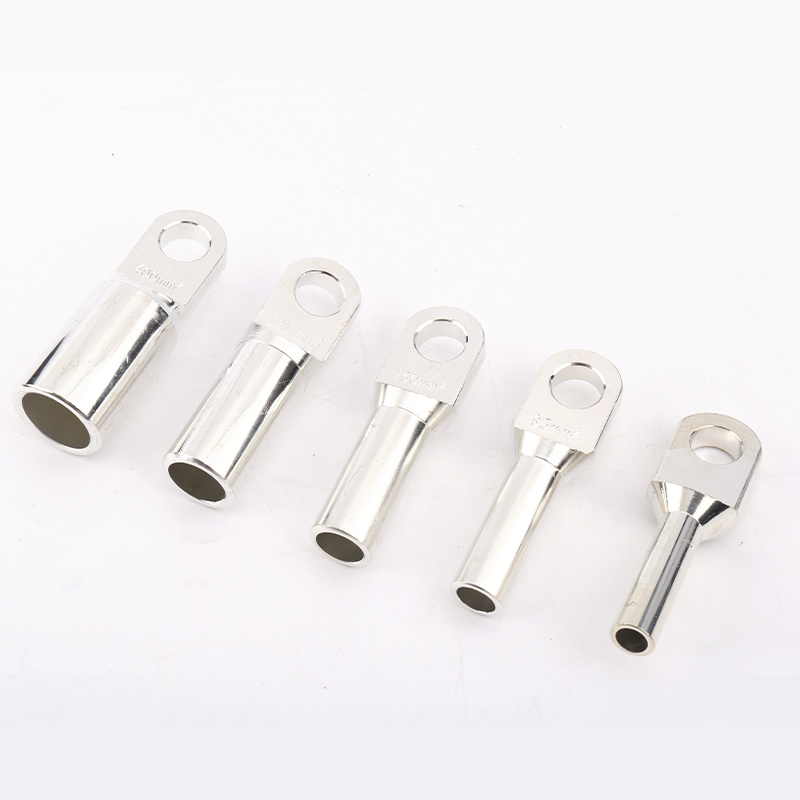
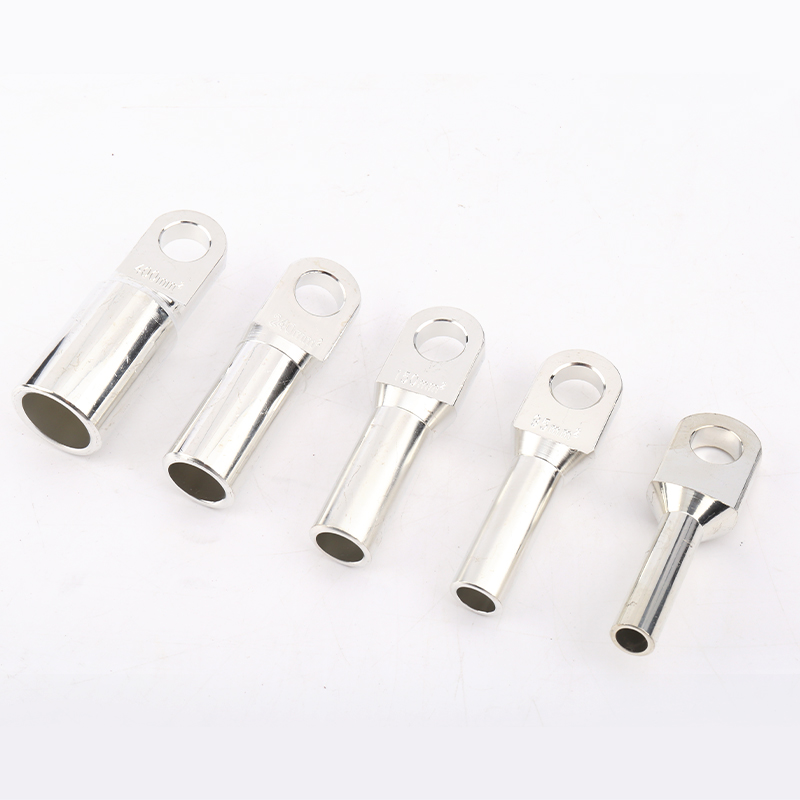
ODT series copper terminal lugs for European
The most critical factor in selecting a copper cable lug is matching it to the exact gauge (AWG or kcmil) or cross-sectional area (mm²) of the cable. The lug barrel must fit the conductor tightly. An undersized barrel creates air gaps that oxidize over time, driving up resistance until the connection overheats; an oversized barrel yields a weak, crimp-resistant fit that fails load tests. The outer diameter of the cable should be approximately 0.1–0.3 mm smaller than the inner diameter of the lug barrel for optimal crimping.
If using standard electrical cables, always verify the manufacturer‘s recommended wire range marked on the lug. Using a terminal that is too small for the wire can result in a loose connection, leading to overheating, voltage drop, and electrical fire hazards. Cutting strands to force a cable into an undersized lug directly violates NEC 110.3 and NEC 110.14 and should never be done.
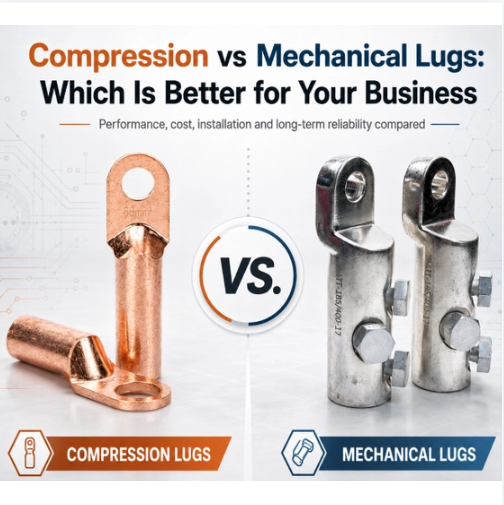
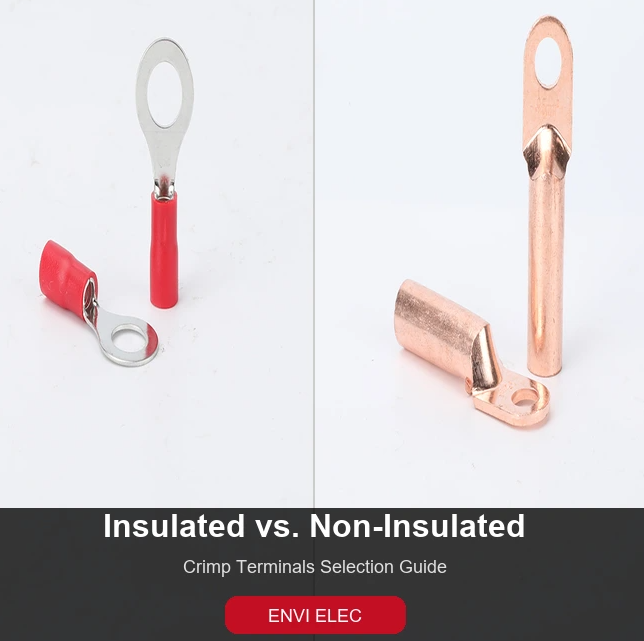
Different installations call for different lug designs. The three most common copper lug types used with circuit breakers are listed below.
| Lug Type | Installation Method | Best Application | Key Consideration |
|---|---|---|---|
| Compression Lug | Crimped using hydraulic or mechanical tool | High-current circuits (200A–800A+), industrial power feeds, vibration-prone environments | Permanent connection; requires correct crimping die set |
| Mechanical Lug | Set screws or bolts | Applications requiring periodic maintenance, lower current circuits | Reusable but may loosen with thermal cycling |
| Pin Lug | Cylindrical shape for specific terminals | Switchgear and circuit breaker applications | Designed for tight terminal block clearances |
Compression lugs are preferred for high-integrity, permanent connections where vibration and long-term reliability are critical. They create a gas-tight, low-resistance interface when properly crimped. Mechanical lugs offer faster installation without specialized tools and can be removed and reused, but they require periodic torque re-tightening per NEC 110.14.
A copper lug that fits the wire perfectly will fail if the mounting hole does not match the circuit breaker terminal stud. Common stud sizes include 1/4″, 5/16″, 3/8″, and 1/2″. Using a lug with a hole larger than the stud dramatically reduces the contact surface area—a 1/2″ hole on a 1/4″ bolt loses roughly 75% of your contact patch. Additionally, circuit breaker terminal lug compatibility is model-specific. Always consult the circuit breaker manufacturer‘s terminal data sheet before finalizing your lug selection.
Material – High-purity T2 copper (conductivity ≥98% IACS) is the industry standard for copper terminal lugs, offering maximum current-carrying capacity with minimal resistance. For applications connecting copper to aluminum conductors, dual-rated lugs marked “AL9CU” or “CU9AL” are required. Such markings indicate the lug is listed for both copper and aluminum conductors and carries a 90°C temperature rating. Never mix dissimilar metals in the same terminal unless the connector is specifically identified for that purpose.
Finish – Bare copper provides excellent conductivity but is vulnerable to oxidation in humid environments. Tin-plated copper lugs dramatically enhance corrosion resistance and maintain low contact resistance in harsh or outdoor settings—silver-plated versions reduce contact resistance to ≤0.5 mΩ for high-precision applications. Nickel-plated copper lugs are available for high-temperature environments requiring continuous service up to 650°F (343°C).
Certification – For reliable and compliant connections, always verify that copper lugs meet recognized international or national standards. Our products are manufactured in accordance with GB/T 14315-2008 (the Chinese national standard for copper terminals and connectors) and IEC 61238-1 (the international standard for compression and mechanical connectors for power cables). These certifications ensure that each lug has passed rigorous mechanical strength, electrical continuity, thermal cycle, and pull-out tests under real-world conditions. Additional compliance includes RoHS for environmental safety. Selecting lugs certified to GB/T 14315-2008 and IEC 61238-1 guarantees dependable performance and global acceptance for your electrical installations.
Even the best copper cable lug will fail with improper installation. For compression lugs, use the correctly matched die set to the lug barrel size. The industry-standard color-coding system helps identify correct dies. A ratchet-type crimping tool is strongly recommended—using regular pliers yields loose crimps that fail over time. After crimping, apply heat shrink tubing for insulation and environmental protection if required by the application. For mechanical lugs, always torque set screws to the manufacturer’s specified value using a calibrated torque wrench to avoid crushing conductors or creating loose connections.
| Error | Risk | Solution |
|---|---|---|
| Choosing a lug solely by stud hole size without checking wire range | Loose conductor fit, overheating under load | Match lug to conductor size, then verify stud hole compatibility |
| Cutting strands to force a cable into an undersized lug | NEC 110.3 violation, degraded ampacity | Select the correctly sized lug for the cable |
| Using a copper-only lug with aluminum conductors | Galvanic corrosion, connection failure | Use dual-rated AL9CU lugs when mixing metals |
| Mixing copper and aluminum conductors in the same terminal | Electrochemical corrosion causes failure | Use copper–aluminum transition terminals or tin-plated bimetallic lugs |
| Overtightening mechanical lugs without a torque wrench | Strand crushing, conductor damage, hidden failure | Always use calibrated torque tools per NEC 2017 requirements |
In short, most copper lug failures trace back to one of these five preventable errors. The most frequent mistake is focusing only on the stud hole size while ignoring wire gauge compatibility, leading to loose, high-resistance connections. Cutting conductor strands to fit an undersized lug is both dangerous and a direct NEC violation. Using copper-only lugs with aluminum conductors guarantees galvanic corrosion over time, and mixing dissimilar metals in the same terminal without a dual-rated connector accelerates failure. Finally, overtightening mechanical lugs without a torque wrench silently damages conductors. Avoiding these pitfalls—by matching lug to wire size, verifying dual ratings for mixed metals, and using calibrated torque tools—dramatically improves connection safety and service life.
At Envi Electric, we manufacture UL-certified copper lugs built for the rigors of modern electrical systems. With nearly 30 years of experience in metal processing and high-quality cable accessories manufacturing, our products are designed to meet demanding power engineering specifications worldwide. Explore our full range of compression lugs, mechanical lugs, tin-plated terminals, and dual-rated connectors at Our Web.
Discover our complete catalog of copper cable lugs and power connectors.
Q: Why do my circuit breaker terminals keep getting hot?
A: This is usually caused by a loose connection or an improperly sized lug. Ensure the lug matches the wire gauge and that the terminal bolt is torqued to the breaker manufacturer’s specifications.
Q: Is there a difference between “battery lugs” and “circuit breaker lugs”?
A: While both are often made of tinned copper, circuit breaker lugs often require specific tongue widths to fit within the breaker’s narrow terminal housing.
Q: Should I use an anti-oxidation paste with tinned lugs?
A: For tinned copper-to-copper connections, it is generally not required, but it is highly recommended when connecting to aluminum busbars to prevent galvanic corrosion.
Selecting the right copper lug for circuit breakers requires attention to wire gauge, stud size, and environmental factors like corrosion. By choosing tinned copper lugs from a reputable supplier, you guarantee the safety and efficiency of your power systems. High-quality components reduce the risk of fire and minimize energy loss through heat.
Secure your electrical connections today. Explore Envi Electric’s premium copper lug collection or contact our specialists for a custom quote on your next large-scale project. Let us help you power your infrastructure with confidence.

With extensive experience, excellent craftsmanship, and superior customer service, we meet various technical requirements to satisfy our customers and have gained widespread
 Optimized by Seraphinite Accelerator