When deploying electrical distribution networks, system reliability hangs entirely on the quality of your heavy-duty cable connections. Molded Case Circuit Breakers (MCCBs) protect industrial machinery from devastating short circuits, but their internal mechanisms rely heavily on external connection integrity. If your electrical joints create thermal resistance, even the most advanced circuit breakers cannot perform effectively. Discover why high-purity copper lugs improve MCCB breaking capacity and safety, and see how upgrading your terminal connectors protects your high-voltage power distribution assets.
An MCCB is engineered to interrupt massive fault currents instantly during an electrical short circuit. When a fault strikes, the breaker must trip within milliseconds to isolate the downstream machinery and prevent catastrophic fires. However, the breaker can only calculate and handle these thermal and magnetic stresses accurately if the cable terminals maintain absolute electrical stability.
If you rely on low-grade brass, recycled copper, or impure alloy lugs at the breaker terminal block, you introduce a hazardous electrical bottleneck. Impure metals possess high internal resistance, which generates localized heating during normal daily operations. This continuous thermal stress degrades the breaker’s internal calibration, causes premature nuisance tripping, and slows down the actual contact separation speed during a true short-circuit event. High-purity electrical connectors ensure that current flows unimpeded, allowing the circuit breaker to operate at its maximum designed efficiency.
Breaking capacity represents the maximum short-circuit current that an MCCB can safely interrupt without exploding or sustaining permanent physical damage. Squeezing tens of thousands of amperes through a loose or highly resistive connection palm creates a massive voltage drop and extreme heat buildup.
Optimal Thermal Dissipation: High-purity copper lugs absorb and dissipate the sudden thermal energy spike generated by a massive fault current, shielding the circuit breaker’s sensitive internal components.
Minimized Contact Voltage Drop: Lower electrical resistance ensures that the breaker’s magnetic trip units detect true fault values instantly, speeding up the mechanism’s total reaction time.
Uncompromised Fault Current Flow: Clean, unobstructed current paths prevent localized arcing at the terminal screw connections, preserving the mechanical integrity of the breaker’s terminal threads.
Industrial arc flashes are often triggered by degraded or high-resistance cable joints. When a terminal lug corrodes or loosens due to poor material density, electricity begins to arc across the microscopic gaps between the lug palm and the breaker terminal pad.
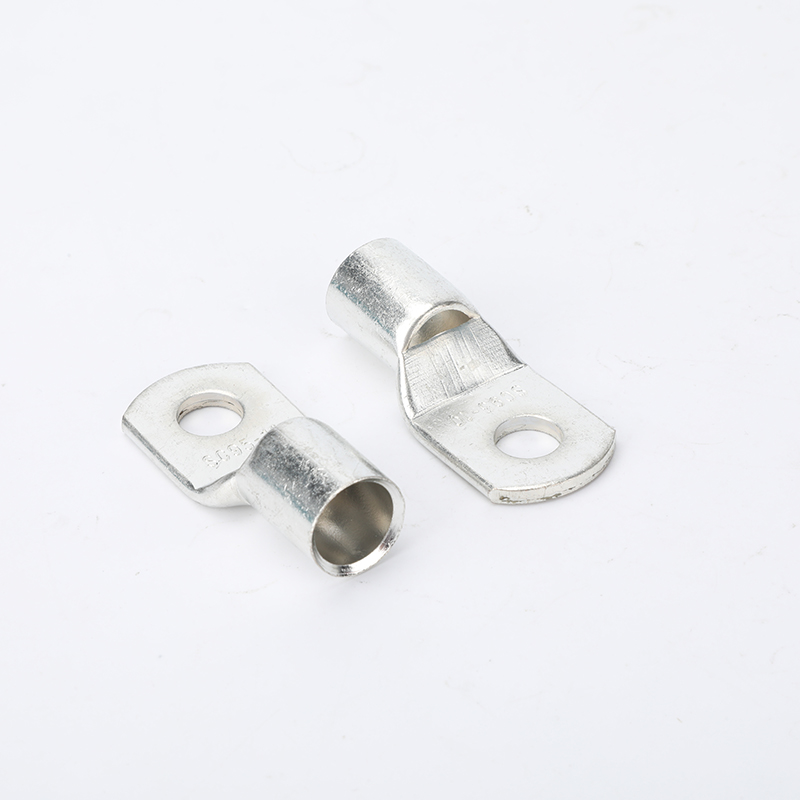
Utilizing 99.9% pure electrolytic tough pitch copper eliminates this vulnerability. Pure copper possesses excellent structural malleability, allowing you to achieve a perfectly flush, gas-tight seal against the breaker housing when torqued down. When this pure copper base is paired with industrial-grade electro-tin plating, it completely prevents galvanic corrosion and atmospheric oxidation, ensuring a low-resistance interface that keeps the entire electrical assembly cool under heavy load conditions.
To help your engineering team select the correct connection hardware, the engineering comparison matrix below outlines how copper purity affects critical operational metrics.
| Performance Metric | Standard Alloy / Recycled Lugs | High-Purity Copper Lugs (ENVI) |
| Material Composition | 85%-95% Copper with impurities | 99.9% Electrolytic Tough Pitch Pure Copper |
| Electrical Conductivity | 60% – 75% IACS (Low efficiency) | 100% – 101% IACS (Maximum transmission) |
| Thermal Conductivity | Poor heat dissipation under load | Rapid heat dissipation, cooling the breaker |
| Contact Resistance | High resistance, leading to hot spots | Extremely low, stable contact interface |
| Behavior Under Fault | Melts or deforms, stalling breaker trips | Structural integrity preserved during high faults |
| Plating Quality | Thin, uneven decorative zinc/tin | Heavy-duty electro-tin plating for oxidation defense |
Safety compliance is a non-negotiable metric when purchasing components for industrial facilities. High-current environments subject electrical terminals to severe cyclic heating and cooling periods. As machinery cycles on and off, the copper lugs expand and contract continually.
Because high-purity copper maintains uniform structural density, it handles thermal expansion flawlessly without developing micro-cracks or suffering structural fatigue. This means your bolted electrical joints retain their factory torque specifications over decades of continuous use. Eliminating the risk of loose lugs protects your personnel from arc flash injuries, guarantees compliance with international safety protocols, and successfully minimizes unexpected plant shutdowns.
From a commercial perspective, focusing on premium-grade connectivity hardware yields substantial operational cost reductions. Lower-quality electrical lugs require frequent inspection with thermal imaging cameras and regular re-torquing by specialized maintenance teams.
By investing in high-purity copper lugs, you eliminate the root cause of localized terminal heating. Your engineering teams spend fewer hours performing manual preventative maintenance, allowing them to focus on core production tasks. Furthermore, preventing premature MCCB failures saves thousands of dollars in replacement equipment costs and shields your company from the massive financial losses associated with unscheduled assembly line downtime.
Why high-purity copper lugs improve MCCB breaking capacity and safety?
High-purity copper lugs offer maximum electrical conductivity and rapid thermal dissipation, which prevents voltage drops and terminal overheating, allowing the MCCB to trip instantly and safely during short circuits.
What is the minimum copper purity required for heavy-duty cable lugs?
For industrial applications, cable lugs must be manufactured from at least 99.9% pure electrolytic copper to ensure optimal conductivity and prevent dangerous thermal resistance.
How does terminal heating affect a molded case circuit breaker?
Excessive terminal heat transfers into the breaker, warping the internal bimetallic strips and causing the MCCB to trip prematurely at normal current levels.
Can electro-tin plating improve the lifespan of a copper terminal lug?
Yes, heavy-duty electro-tin plating creates an anti-corrosive barrier that stops oxidation and galvanic corrosion when connecting copper conductors to brass or aluminum breaker ports.
What is IACS and why does it matter for industrial electrical connectors?
IACS stands for International Annealed Copper Standard, where 100% represents pure copper; choosing connectors with high IACS ratings guarantees minimal energy loss and maximum safety.
How do high-purity copper terminals prevent industrial arc flash hazards?
They maintain a completely flush, low-resistance connection with the breaker, eliminating the microscopic gaps and voltage drops that cause destructive electrical arcing.
Are pure copper cable lugs compatible with flexible stranded power cables?
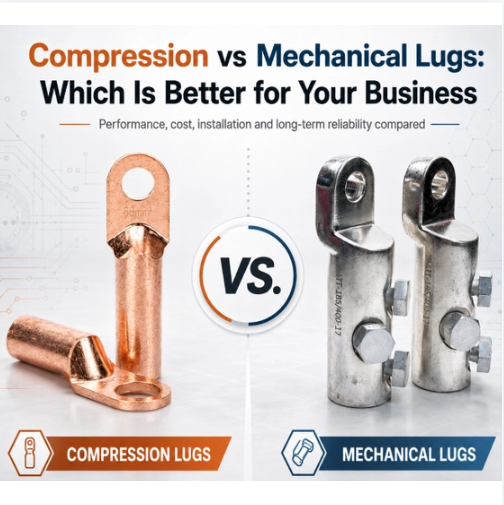
Yes, the seamless compression barrels of high-purity lugs are designed to crimp perfectly onto stranded cables, forming a dense, gas-tight mechanical joint.
Do premium copper lugs help save energy in a manufacturing plant?
Yes, reducing electrical resistance at every connection point minimizes voltage drops and eliminates power waste dissipated as heat, lowering factory utility expenses.
How often should high-purity plated copper lugs be inspected?
While highly reliable, they should undergo standard thermal imaging scans annually during routine plant maintenance to verify bolt torque integrity.
Can I use standard copper lugs for high-vibration machinery applications?
Standard lugs can crack under vibration, whereas seamless, high-purity copper lugs offer superior structural malleability to withstand severe industrial movement without loosening.
Protecting your high-voltage industrial equipment demands heavy-duty hardware built to flawless standards. ENVI supplies premier, certified high-purity copper connectors designed to maximize the electrical performance and breaking safety of your circuit breaker networks. Explore our full range of rugged connectivity solutions at Our Web today. Contact our technical engineering division now to request a detailed product catalog and secure a competitive bulk price quotation for your next electrical infrastructure project.

With extensive experience, excellent craftsmanship, and superior customer service, we meet various technical requirements to satisfy our customers and have gained widespread