
Reliable cable connections are essential for electrical power distribution, industrial facilities, and infrastructure projects. However, cable termination and jointing points require special attention because inadequate insulation, moisture ingress, or improper installation can affect the reliability of an electrical system.
Cold shrink cable accessories provide a practical solution for cable insulation, sealing, and connection protection in applications designed for these products.
Unlike conventional heat shrink products, cold shrink accessories are designed to contract through the elastic recovery of pre-expanded materials, eliminating the need for external heating during the shrinking process.
In this guide, we explain what cold shrink cable accessories are, how they work, their common types, and what buyers should consider when sourcing them for electrical projects.
Cold shrink cable accessories are electrical insulation and protection products designed to shrink around a cable through the elastic recovery of pre-expanded materials.
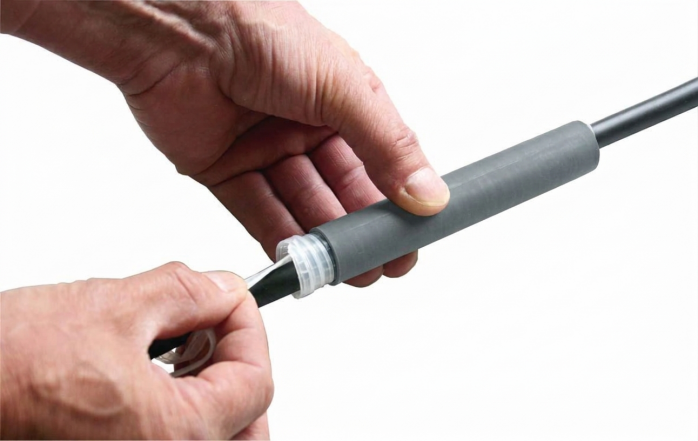
During manufacturing, the elastic component is expanded and supported by a removable plastic or spiral support core. During installation, the installer positions the accessory over the designated cable section and removes the support core according to the manufacturer’s instructions.
The accessory then contracts and conforms to the cable surface.
Depending on the product design and intended application, cold shrink cable accessories may provide functions such as:Electrical insulation,Environmental sealing,Cable interface protection,Stress control in appropriately designed cable terminations,Protection of cable joints and connection areas
Cold shrink accessories are commonly manufactured using silicone rubber or other specified elastomeric materials. The actual material composition and functions depend on the product design.
For buyers, it is important to distinguish between general-purpose cold shrink tubing and complete cable accessories designed for specific electrical applications. They are not automatically interchangeable.
The working principle of cold shrink technology is based on elastic recovery.
A typical cold shrink accessory consists of an elastomeric sleeve held in an expanded state by a removable support core. Once the support core is removed, the sleeve contracts around the prepared cable surface.
The installation process generally involves the following stages.
Prepare the cable according to the specified installation instructions. This may involve removing selected layers of the cable sheath, screen, or insulation.
Correct cutting dimensions, surface cleanliness, and treatment of relevant interfaces are important for the final installation quality.
Slide the accessory into the specified position and verify its orientation and alignment.
The accessory must be compatible with the cable dimensions and the intended application.
Remove the support core in the prescribed sequence. The elastomeric component contracts around the cable, creating the intended contact and sealing interface.
Complete any additional procedures required by the product design, such as grounding, sealing, screen connections, or installation of other components.
The exact procedure varies by product type and voltage class. Installers should always follow the manufacturer’s instructions and applicable project requirements.
Cold shrink technology is used in different types of cable accessories. Selecting the correct product depends on the cable system, electrical requirements, installation environment, and intended function.
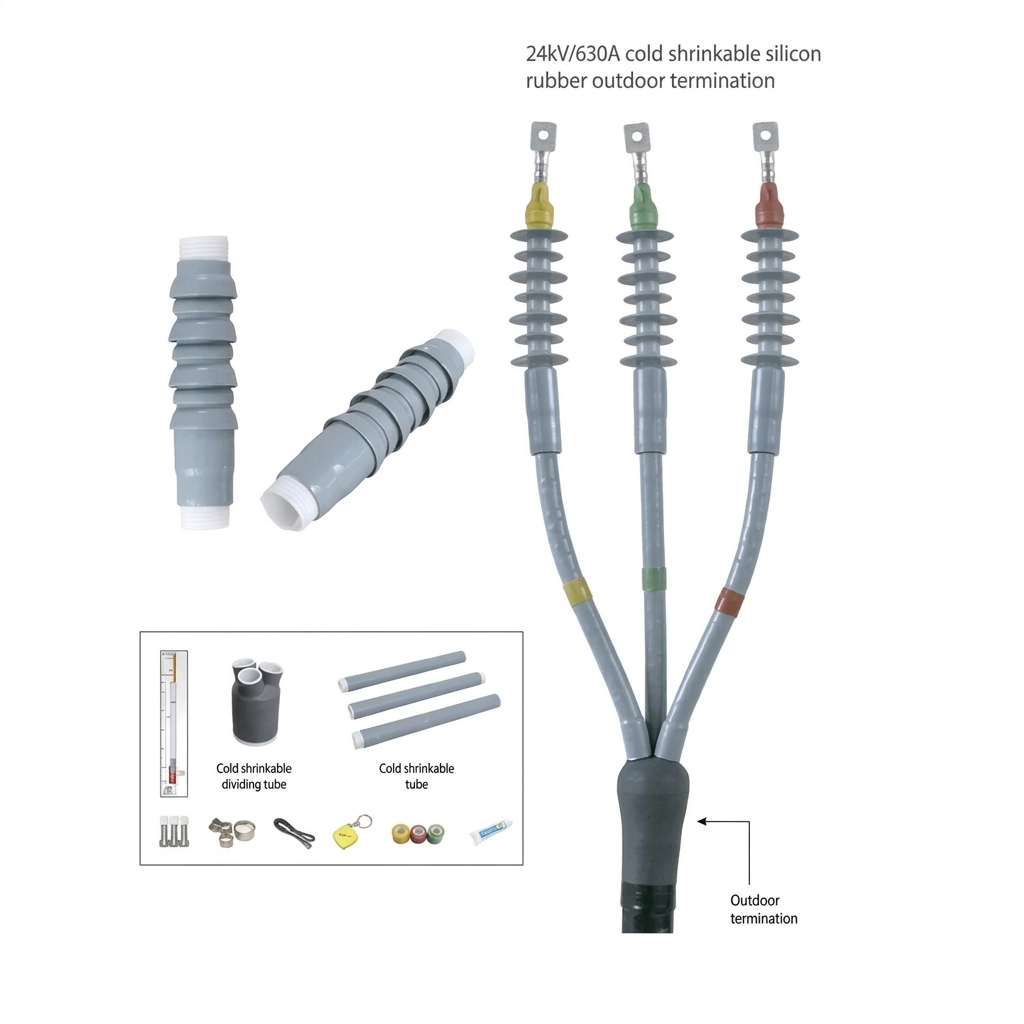
Cold shrink cable terminations are designed to finish and protect the ends of electrical cables where they connect to electrical equipment or other system components.
Depending on their design, they may incorporate insulation, sealing, and electrical stress-control components.
Cold shrink terminations are available for different applications, including indoor and outdoor installations. Buyers should confirm the intended environment, cable construction, and applicable voltage rating before ordering.
Cold shrink cable joints are used to connect compatible cable sections while restoring the required insulation and protection around the joint area.
The design may include insulating components, conductive connections, screen continuity components, and outer protective layers, depending on the cable system and product configuration.
Compatibility with the conductor, insulation type, cable dimensions, and required electrical performance should be verified before procurement.
Cold shrink tubing is an elastic sleeve used for insulation, sealing, or environmental protection in applications for which the tubing is specifically designed.
It can be used in selected electrical and industrial applications, but general-purpose cold shrink tubing should not be treated as a substitute for a complete medium-voltage cable termination or joint.
When purchasing cold shrink tubing, confirm the material, dimensions, shrink range, operating conditions, and intended application.
Cold shrink technology offers several practical benefits when the product is correctly selected and installed.
Cold shrink accessories contract through elastic recovery rather than heat-induced shrinking. Installation therefore does not normally require a torch or other heating equipment for the shrinking operation.
This can be advantageous at sites where open-flame work is undesirable or restricted. Other site safety requirements and electrical work procedures must still be followed.
Because no heating step is needed for contraction, cold shrink accessories can simplify certain installation procedures.
Actual installation time depends on cable construction, product design, site conditions, and installer experience. Proper cable preparation and positioning remain essential.
The elastic material contracts around the designated cable section, helping establish the intended contact interface.
The permitted cable diameter range and dimensional compatibility must be verified against the specific product specifications.
Products designed for cable termination and jointing can provide electrical insulation and sealing when used within their specified application conditions.
Performance depends on material properties, component design, product qualification, and installation quality. Buyers should review relevant technical documentation rather than relying on general product descriptions alone.
Cold shrink and heat shrink technologies use different methods to achieve contraction. Neither is universally the best choice for every electrical project.
| Comparison | Cold Shrink Accessories | Heat Shrink Accessories |
| Shrinking method | Elastic recovery | Heat-induced shrinking |
| External heating for shrinking | Normally not required | Required |
| Installation considerations | Positioning, support-core removal, and interface preparation | Heating procedure, shrink sequence, and interface preparation |
| Equipment requirements | Usually no heating tool for shrinking | Suitable heating equipment |
| Product selection | Based on cable dimensions, voltage rating, application, and design | Based on cable dimensions, voltage rating, application, and design |
Which Option Should Buyers Choose?
Cold shrink accessories may be suitable when avoiding heating operations is an important installation consideration.
Heat shrink accessories may also be appropriate for projects where their design, installation process, and technical specifications meet the project requirements.
Before making a purchasing decision, evaluate:The electrical system and required voltage rating;Cable construction and dimensional compatibility;Indoor or outdoor installation conditions;Applicable standards and project specifications;Installation procedures and available equipment;Product qualification documents and supplier support
The most appropriate choice is the product that meets the actual engineering requirements, rather than the technology with the most general marketing claims.
When requesting a quotation, providing complete technical information helps suppliers identify the appropriate product more efficiently.
Consider including the following details in your inquiry:
Product type: Cold shrink termination, cold shrink joint, or cold shrink tubing
Voltage rating: The required electrical system rating
Cable information: Conductor cross-section, insulation type, and relevant cable diameters
Application: Indoor, outdoor, industrial, utility, or other specified use
Quantity: Estimated order quantity or project demand
Technical requirements: Applicable standards, testing requirements, and project specifications
Documentation: Required datasheets, installation manuals, and qualification records
Delivery requirements: Destination market and expected delivery schedule
If available, providing the cable datasheet or a clear photograph of the cable structure can help clarify the required specifications.
Cold shrink cable accessories provide a practical approach to cable insulation, sealing, and protection through the elastic recovery of pre-expanded materials.
Their installation process does not normally require external heating for shrinking, making them an option worth considering for electrical distribution, industrial, and infrastructure applications where the relevant product specifications are met.
For overseas buyers, the key to successful procurement is to verify cable compatibility, voltage rating, product type, applicable standards, and installation requirements before placing an order.
Looking for cable accessories for your next project? Contact our team with your cable specifications, required product type, and project requirements. We can review the information provided and help identify suitable product options and the technical documentation available for evaluation.
Contact us today to discuss your cable accessory requirements and request a quotation.

With extensive experience, excellent craftsmanship, and superior customer service, we meet various technical requirements to satisfy our customers and have gained widespread
 Optimized by Seraphinite Accelerator