
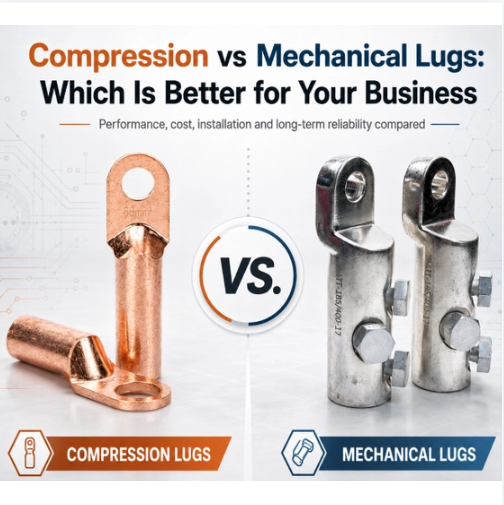
Choosing between a compression cable lug and a mechanical cable lug is one of the most consequential decisions electrical engineers and procurement managers make during project specification. The wrong choice can lead to connection failures, costly rework, safety hazards, and unplanned downtime — all of which directly impact your bottom line.
At ENVI ELEC, we have spent nearly three decades manufacturing both types of cable lugs for industrial, renewable energy, and utility applications worldwide. This guide draws on our hands-on production experience, testing data, and customer feedback to give you an honest, manufacturer-level comparison — so you can specify the right lug for every project.
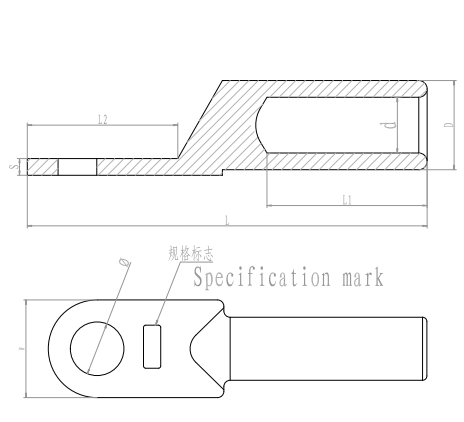
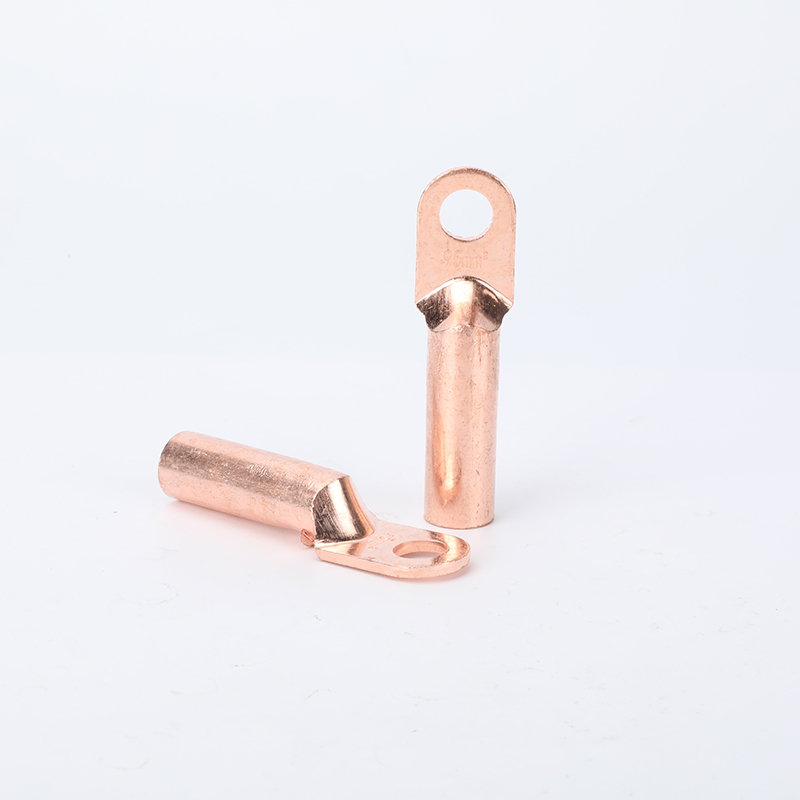
A compression cable lug (also called a crimp terminal or crimped cable lug) is a tubular metal fitting that attaches to a conductor by permanently deforming the barrel around the wire strands using a crimping tool or hydraulic press. The cold-welding effect created by high-pressure compression produces a gas-tight, low-resistance electrical bond between the conductor and the lug barrel.
Key characteristics of compression lugs:
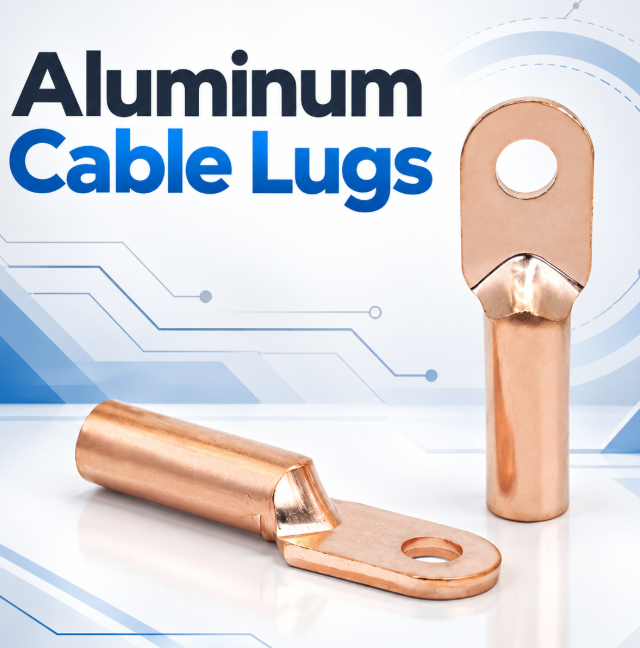
Our DT series copper compression cable lugs, for example, are manufactured from 99.9% pure annealed copper and cover conductor cross-sections from 10 mm² up to 630 mm², with operating temperatures from -55°C to +150°C — making them suitable for both indoor switchgear and outdoor substation installations.
206A4912
A mechanical cable lug (commonly known as a shear-bolt lug or bolted connector) secures the conductor through one or more torque-controlled bolts that apply calibrated clamping force to the wire strands inside the lug barrel. No crimping tool is required — installation relies entirely on proper torque application using a standard wrench or torque driver.
Key characteristics of mechanical lugs:
The BLMT mechanical shear bolt lug from ENVI ELEC exemplifies this category: 6061 aluminum alloy body, tin-plated surface, applicable conductor range of 25–630 mm², rated current up to 900 A, and a wide operating temperature window of -40°C to +100°C. Its crimp-free design makes it especially popular in field service and retrofit scenarios where bringing heavy crimping equipment onsite is impractical.

| Comparison Factor | Compression Lug | Mechanical Lug |
|---|---|---|
| Installation Tool Required | Hydraulic/hand crimper + die set | Torque wrench only |
| Connection Permanence | Permanent (cold weld) | Reversible (retightenable) |
| Electrical Contact Resistance | Very low (<5 μΩ typical) | Low (5–15 μΩ typical) |
| Labor Skill Level | Trained technician required | Basic electrician skill sufficient |
| Reusability | Not reusable after crimp | Can be removed & reused |
| Vibration Resistance | Excellent (cold-welded bond) | Good (requires periodic retorquing) |
| Unit Cost Range | $0.50 – $8.00 per unit | $2.00 – $25.00 per unit |
| Best For | Fixed installations, mass production, high-current busbars | Field work, retrofits, temporary setups, variable maintenance needs |
The most visible difference lies in how each lug type reaches the conductor. Compression lugs demand a matched die-and-crimp system: you must select the correct die profile for your conductor size, strip the insulation to the exact length specified by the lug’s barrel depth, insert the conductor fully, and apply the crimper until it reaches its full stroke. Under-compression leaves loose strands and elevated resistance; over-compression can crack the barrel or damage the conductor.
Mechanical lugs eliminate this complexity. You strip the conductor, insert it into the barrel, and tighten the shear bolt(s) to the manufacturer-specified torque value (typically 30–55 N·m depending on size). The bolt shears at the designed torque, providing built-in over-torque protection. No die selection, no calibration, no press force guesswork. For teams working across multiple sites with varying conductor sizes, this simplicity translates into faster job completion and fewer installation errors.
When installed correctly, compression lugs deliver the lowest possible contact resistance. The cold-welding action fuses the conductor strands to the barrel wall, creating a metallurgical bond that resists oxidation and thermal cycling far better than any mechanical interface. Independent test data consistently shows compression terminations achieving contact resistance below 5 micro-ohms — a benchmark that mechanical connections struggle to match without ongoing maintenance.
That said, mechanical lugs have closed the gap significantly in recent years. Modern shear-bolt designs with multi-point clamping and anti-loosening features achieve stable contact resistance in the 5–15 micro-ohm range when properly torqued. The trade-off is that mechanical connections require periodic retorquing per maintenance schedules (typically every 12–24 months in vibration-prone environments) to compensate for thermal cycling and creep relaxation. Compression bonds, once made, remain stable for the life of the installation without intervention.
This is where mechanical lugs shine. If a cable needs replacement, a mechanical lug can be unbolted, the old conductor removed, and a new one inserted and retorqued — often in under five minutes. The same lug can be reused multiple times if the threads and barrel remain undamaged. In contrast, a crimped compression lug must be cut off and discarded; replacing the termination means installing an entirely new lug and repeating the full crimp procedure.
For projects where cable changes are anticipated — such as prototype equipment, rental fleets, or modular industrial systems — the serviceability advantage of mechanical lugs can outweigh their higher unit cost many times over.
| Application Scenario | Recommended Type | Rationale |
|---|---|---|
| Switchgear / MCCB / MCB Termination | Compression | Permanent low-resistance bond critical for breaker reliability |
| Field Retrofit / Emergency Repair | Mechanical | No heavy equipment needed; fast install with basic tools |
| Solar PV Combiner Boxes | Either (see note) | Compression for fixed arrays; mechanical for serviceable string connections |
| Wind Turbine Nacelle Wiring | Mechanical | Vibration environment benefits from retightenable connections |
| Transformer Bushing Connections | Compression | Maximum current capacity and long-term stability essential |
| Temporary Power Distribution | Mechanical | Reusable, quick connect/disconnect for event/construction sites |
Not Sure Which Lug Type Fits Your Project?
ENVI ELEC engineers provide free technical consultation to help you select the optimal cable termination solution based on your specifications, environment, and budget.
Follow this four-step framework to make a data-driven decision rather than relying on habit or lowest upfront price alone.
Start with the technical baseline: conductor material (Cu or Al), cross-section size, maximum continuous current, short-circuit rating, ambient temperature range, and whether the connection will be indoors or exposed to weather. Document whether the installation is permanent (e.g., factory-assembled switchgear) or subject to future modification (e.g., modular skid-mounted equipment). These parameters immediately narrow the viable options and often point clearly toward one lug type.
Don’t stop at unit price. Calculate TCO across the expected service life:
In high-volume production environments (500+ terminations per project), compression lugs almost always win on TCO despite requiring specialized tooling. In low-volume field scenarios (under 50 terminations), mechanical lugs frequently deliver lower total spend because they eliminate tool investment and reduce per-connection labor time by 40–60%.
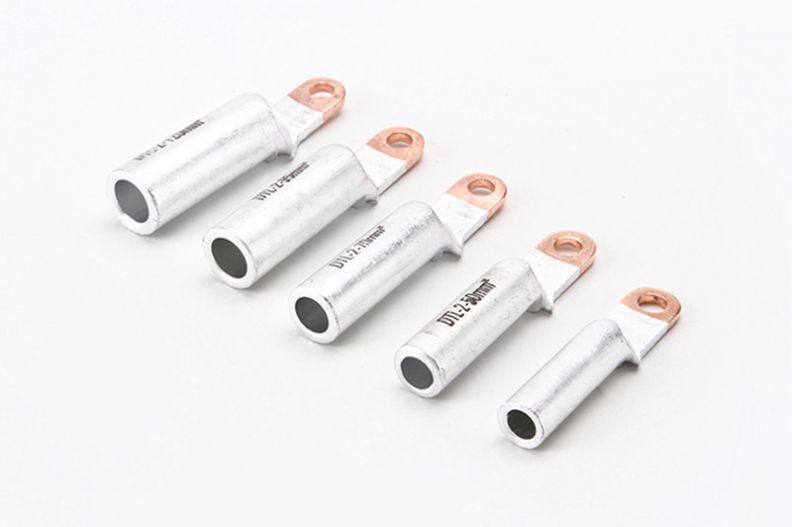
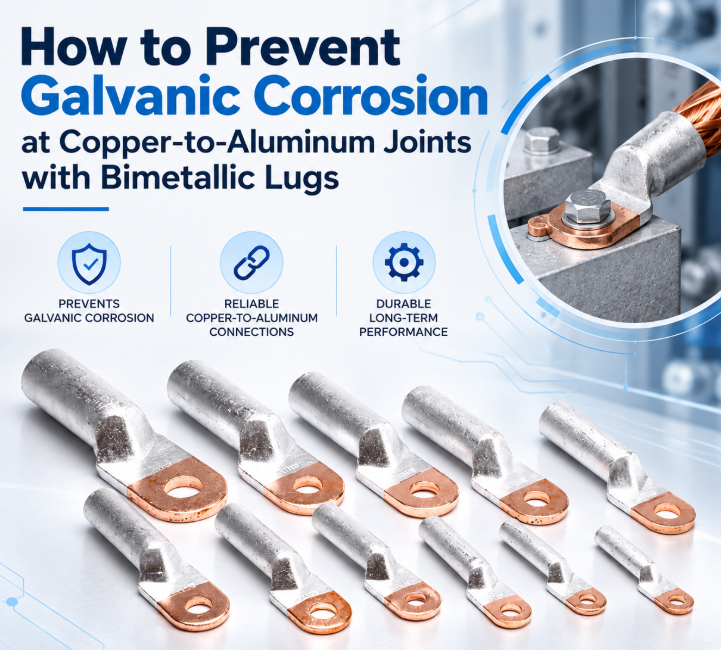
Corrosive atmospheres (coastal salt spray, chemical plants), extreme temperature swings (-40°C to +150°C), and constant vibration (wind turbines, heavy machinery, rail traction) all influence lug selection. Compression lugs generally offer superior corrosion resistance due to the gas-tight seal formed during crimping. However, tin-plated mechanical lugs with proper torque management perform well in most industrial environments. For Cu-to-Al transition points, always use a purpose-built bimetal cable lug regardless of connection method to prevent galvanic corrosion.
Verify that your chosen lug carries certifications matching your project’s governing standards. Key marks to look for include IEC 61238-1 (international), UL 486 (North America), GB/T 14315-2008 (China), and relevant utility-specific approvals. At ENVI ELEC, every product in our compression cable lug lineup and mechanical shear bolt cable lugs collection undergoes rigorous testing against these benchmarks before leaving our facility.
There is no universal winner — the answer depends entirely on your operational context. Here is our honest assessment as a manufacturer who produces both types:
Choose Compression Lugs When:
Choose Mechanical Lugs When:
Need Custom Cable Lugs for Your Specific Application?
From bimetal transitions to custom barrel dimensions, ENVI ELEC offers OEM/ODM services backed by nearly 30 years of metalworking expertise. Send us your drawings — we’ll engineer the perfect fit.
Yes. Modern shear-bolt mechanical lugs like ENVI ELEC’s BLMT series are rated for currents up to 900 A (conductor sizes up to 630 mm²). While compression lugs still hold an edge in peak current capacity (up to 1,200 A for large copper terminals), properly torqued mechanical lugs perform reliably in most medium-voltage and high-current low-voltage applications. The key is ensuring the torque value matches the manufacturer’s specification and conducting periodic infrared thermography inspections to verify connection integrity under load.
It depends on the specific industrial context. For fixed industrial installations such as motor control centers, panel shops, and assembly-line switchgear, compression lugs are typically preferred due to their permanence, lower long-term resistance, and suitability for high-volume production workflows. For industrial maintenance and field service — including plant retrofits, equipment relocation, and emergency repairs — mechanical lugs offer decisive advantages in speed, tool independence, and reusability. Many industrial users maintain inventory of both types and select based on the task at hand.
Yes. Proper compression requires a crimper (hydraulic for larger sizes above 120 mm², hand-operated for smaller conductors) and a matched die set corresponding to the lug’s barrel diameter and the conductor’s cross-section. Using the wrong die size is one of the leading causes of compression termination failure. Additionally, some specifications mandate periodic calibration of crimping tools and die inspection for wear. This tooling requirement represents both an upfront capital investment and an ongoing maintenance responsibility that must be factored into project planning.
Generally yes, with caveats. A mechanical lug can be unbolted, the conductor removed, and a new conductor inserted and retorqued — provided the barrel interior, bolt threads, and clamping surfaces show no signs of galling, corrosion, or deformation. Most manufacturers recommend inspecting the lug before reuse and replacing it if any damage is observed. Shear-bolt designs use one-time-use bolts (the bolt head shears off at the correct torque), so reuse requires replacing the bolt while retaining the lug body. This partial reusability still offers significant cost savings compared to discarding entire compression assemblies.
When correctly installed within their rated environmental envelope, both lug types are designed for the service life of the connected equipment — typically 20–40 years. Compression lugs, once crimped, require essentially zero maintenance and their performance does not degrade over time if the initial crimp quality was sound. Mechanical lugs achieve comparable lifespans but depend on adherence to the prescribed retorquing schedule (usually every 12–24 months in demanding environments). Neglected mechanical connections can develop increased resistance over 5–10 years due to creep and thermal cycling, potentially leading to hot spots detectable via thermal imaging.
Absolutely. Tin-plated copper compression lugs and properly sealed bimetal lugs are widely used in outdoor substations, solar farms, wind turbine towers, and overhead line hardware. The key requirement is selecting a lug with appropriate plating (tin, nickel, or epoxy-sealed) for the local atmospheric conditions, and ensuring the crimped barrel is protected by heat-shrink tubing or insulated tape where exposure to moisture and contaminants is expected. Always verify the lug’s IP rating or environmental classification matches your installation conditions.
Several verification methods exist: (1) Visual inspection — the crimp should show symmetrical indentation with no cracks or splits in the barrel; (2) Pull-out test — the completed termination should withstand the minimum pull-out force specified by IEC 61238-1 for its conductor size; (3) Micro-ohm measurement — contact resistance should fall within the manufacturer’s published range (typically under 5 μΩ for copper-to-copper); (4) Cross-section analysis (destructive) — cutting and polishing the crimp reveals strand compaction density. For mission-critical installations, combining visual check with resistance measurement provides strong quality assurance without destructive testing.
ENVI ELEC has been a professional electric power fittings manufacturer for nearly thirty years. Our facility integrates raw material sourcing, precision metal processing, mold development, and rigorous quality control under one roof — allowing us to deliver consistent quality, competitive pricing, and responsive customization for B2B customers worldwide.
Beyond standard products, our customized product division supports OEM and ODM requests: send us your technical drawings, and our engineering team will develop molds, define processes, and manufacture to your exact specifications. From AMB mechanical connectors to bespoke bimetal transitions, we turn your concepts into certified products ready for global deployment.
Ready to Source Cable Lugs from a Trusted Manufacturer?
Contact ENVI ELEC today for quotes, samples, and technical support. We serve B2B customers in photovoltaics, wind power, EV charging, industrial equipment, building electrical, and utilities worldwide.
Choosing between a compression cable lug and a mechanical cable lug is not about picking the “better” product in isolation — it is about matching the right termination technology to your project’s technical requirements, operational constraints, and total cost structure. Compression lugs excel in permanent, high-volume, high-reliability installations where the cold-welded bond delivers unmatched electrical performance. Mechanical lugs dominate in field-serviceable, flexible, and tool-constrained scenarios where speed and reusability matter more than marginal resistance differences.
At ENVI ELEC, we manufacture both categories to international standards (IEC 61238-1, GB/T 14315-2008, UL 486) and stand behind every product with nearly three decades of metalworking heritage. Whether you need a thousand DT-series compression lugs for a switchgear production line or a hundred BLMT mechanical lugs for a wind farm retrofit, our team is ready to support your specification, sampling, and volume delivery needs.
Recommend Products

With extensive experience, excellent craftsmanship, and superior customer service, we meet various technical requirements to satisfy our customers and have gained widespread
 Optimized by Seraphinite Accelerator