

Aluminium conductors are lighter and cheaper than copper, but they create a recurring specification headache at the termination: where the cable meets the busbar or equipment, a poor material choice causes heating, loosening, and galvanic corrosion. The two lug families that solve this are the pure aluminium cable lug and the bimetallic (Cu/Al) lug. Buying the wrong one quietly raises failure and warranty risk across an entire installation.
This guide is for specification engineers and procurement leads who must decide, per connection, whether a pure aluminium lug is acceptable or whether a bimetallic lug is required. We cover conductor compatibility, conductivity and current capacity, corrosion risk, cost and weight, and the application scenarios that settle the choice—then give you a checklist.
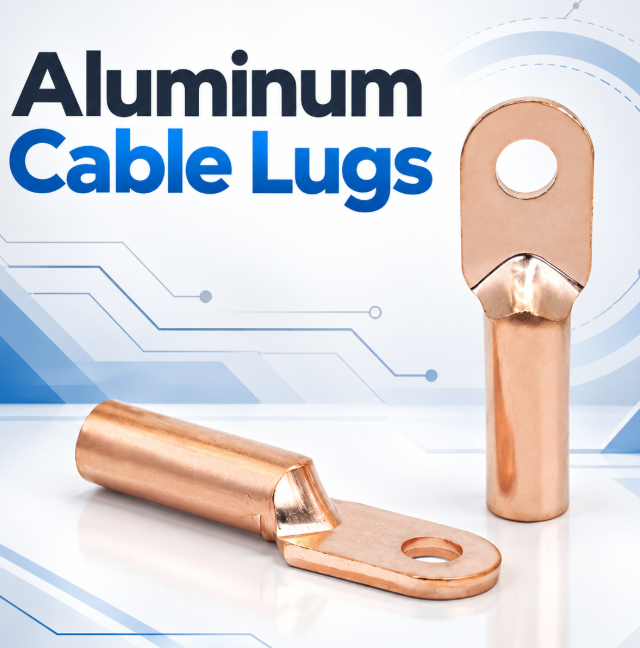
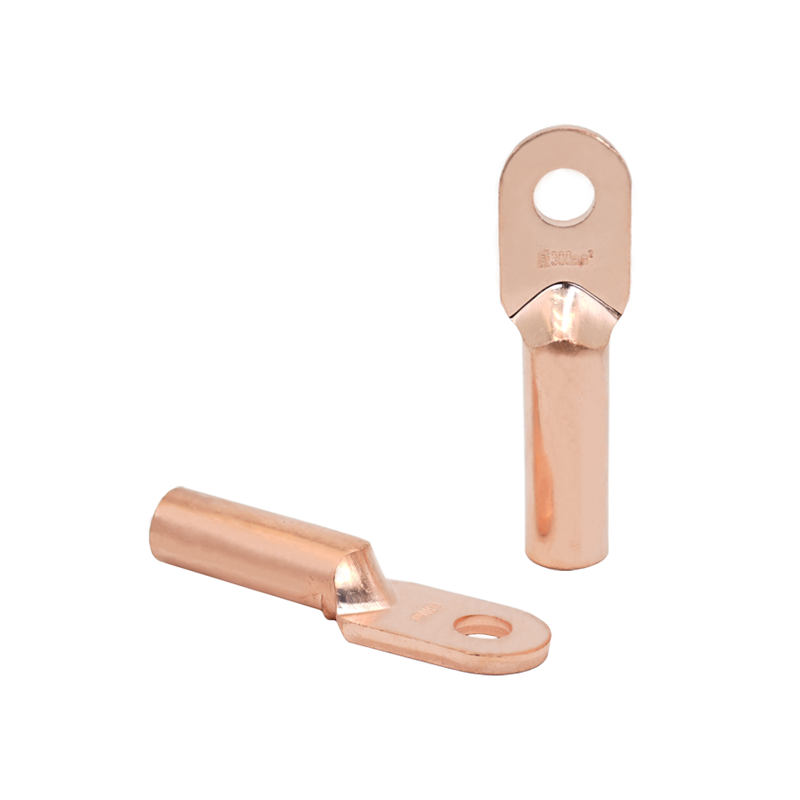
An aluminium cable lug is a one-metal termination made entirely from aluminium (or aluminium alloy), barrel and palm, crimped onto an aluminium conductor and bolted to an aluminium-bodied termination point—typically an aluminium busbar or an aluminium lug already on the equipment. ENVI ELEC also supplies pure copper alternatives such as the DT copper terminal cable lug when the whole run and termination are copper.
The advantage of a single-metal aluminium lug is simplicity and weight: no second material, no bimetal joint, and a lighter assembly. Its strict condition is that both sides of the joint must be aluminium, or you invite galvanic corrosion at the dissimilar-metal interface.
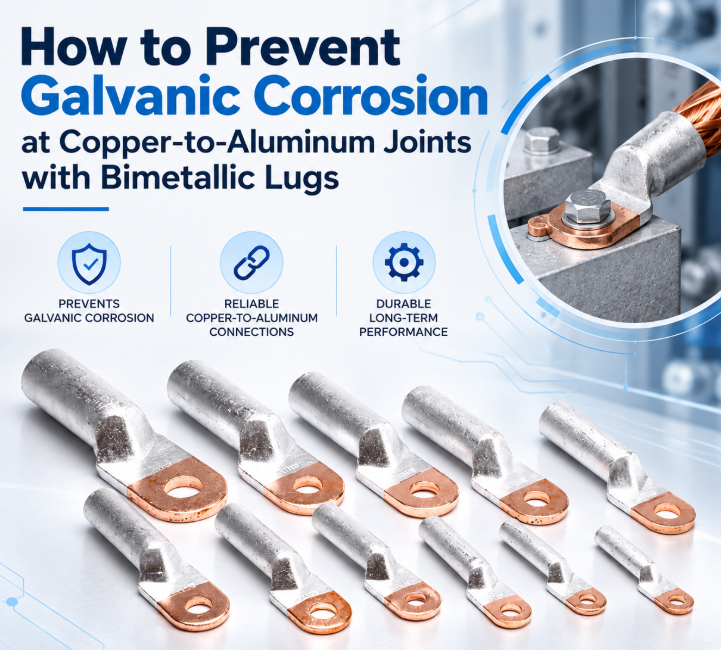
A bimetallic lug joins an aluminium barrel (for the Al conductor) to a copper palm (for the termination point) in one factory-friction-welded body, so the field joint is aluminium-to-aluminium on one end and copper-to-copper on the other. ENVI ELEC’s DTL bimetal copper-aluminium cable lug is rated to IEC 61238-1 / GB/T 14315 and covers 10–630 mm² at currents up to about 1200 A. The friction weld eliminates the dissimilar-metal contact that would otherwise corrode.
Bimetallic lugs are the default answer whenever an aluminium cable must terminate onto a copper busbar, a copper stud, or copper equipment—which is the majority of real switchgear.
A pure aluminium lug only works when both the conductor and the termination surface are aluminium. If the equipment side is copper—as it usually is—a pure Al lug forces an Al-to-Cu joint in the field, which is exactly what you must avoid. A bimetallic lug keeps each interface same-metal by design.
Aluminium’s conductivity is about 61% of copper’s, so an aluminium lug of equal size carries less current and runs warmer unless sized up. Bimetallic lugs preserve a copper palm at the termination, keeping contact resistance and heating low at the bolted interface even though the barrel is aluminium. For high-current industrial feeders, size the lug to the aluminium conductor’s rated current and confirm the palm bolt torque.
When aluminium and copper meet in the presence of moisture and an electrolyte, aluminium corrodes preferentially (galvanic corrosion), the joint loses tension, and resistance climbs. A pure aluminium lug terminating on copper almost guarantees this. A bimetallic lug removes the dissimilar-metal contact entirely, which is why it is specified for Cu-to-Al transitions.
Pure aluminium lugs are lighter and, where aluminium is already the busbar material, cheaper because there is no copper content or friction-weld step. Bimetallic lugs cost more per piece but prevent the far larger cost of a failed joint: downtime, thermal imaging calls, and replaced switchgear. Weight matters on overhead and mobile installations where every gram counts.
Use pure aluminium lugs only in all-aluminium systems—aluminium busbars, aluminium-bodied equipment, or aluminium-to-aluminium joints with proper anti-oxidant paste. Use bimetallic lugs for the common case of an aluminium cable landing on copper busbars or copper equipment, and for outdoor and utility feeds where corrosion risk is highest. The DTLX bimetallic small-head lug suits tight termination spaces, while custom brass-aluminium bimetal lugs cover non-standard drawings.
Decision rule:
Specifying Cu-to-Al terminations at scale?
ENVI ELEC supplies DTL bimetal lugs (10–630 mm², IEC 61238-1 / GB) plus small-head and custom bimetal options, with OEM/ODM tooling and samples.
Only when both the conductor and the termination surface are aluminium. In an all-aluminium joint with anti-oxidant compound and correct torque, a pure Al lug is lighter and lower cost. Any copper on the other side means switch to bimetallic.
Not safely for the long term. An Al-to-Cu joint corrodes galvanically and loosens. Use a bimetallic lug so the aluminium meets aluminium and the copper palm meets copper.
Lower weight and, in all-aluminium systems, lower cost and one fewer material interface. The trade-off is zero tolerance for a copper termination surface.
Yes, if sized to the aluminium conductor’s current rating and used on aluminium termination points with proper torque. For copper-terminated high-current gear, bimetallic lugs are the correct and safer choice.
Identify the metal of the termination surface. Copper busbar or copper stud → bimetallic. Aluminium busbar → pure aluminium is acceptable. When in doubt, specify bimetallic to eliminate the dissimilar-metal joint.
Pure aluminium lugs earn their place only in all-aluminium joints; everywhere an aluminium cable meets copper, a bimetallic lug is the engineering-correct, corrosion-free answer. Specify by busbar material, size to current, and source from a supplier that certifies IEC/GB performance and can deliver both standard and custom bimetal bodies. ENVI ELEC’s cable lug range covers the full decision set from pure copper through bimetallic.
Get a Cu-to-Al termination recommendation
Send us your conductor size and busbar material—our engineers will specify the right lug and supply IEC/GB-compliant samples.

With extensive experience, excellent craftsmanship, and superior customer service, we meet various technical requirements to satisfy our customers and have gained widespread
 Optimized by Seraphinite Accelerator