
Transitioning between aluminum and copper conductors is a common yet critical task in electrical installations. Without the right connector, you risk galvanic corrosion, overheating, and system failure. A bimetallic cable lug is engineered to solve this problem by creating a secure, low-resistance joint between these dissimilar metals . As a procurement professional or engineer, understanding the key selection criteria ensures a safe and durable electrical transition.
Choosing the right bimetallic connector isn’t just about matching the cable size; it is a critical decision that impacts the safety and efficiency of your system. Here are the seven essential factors to consider to ensure you are making the best choice.
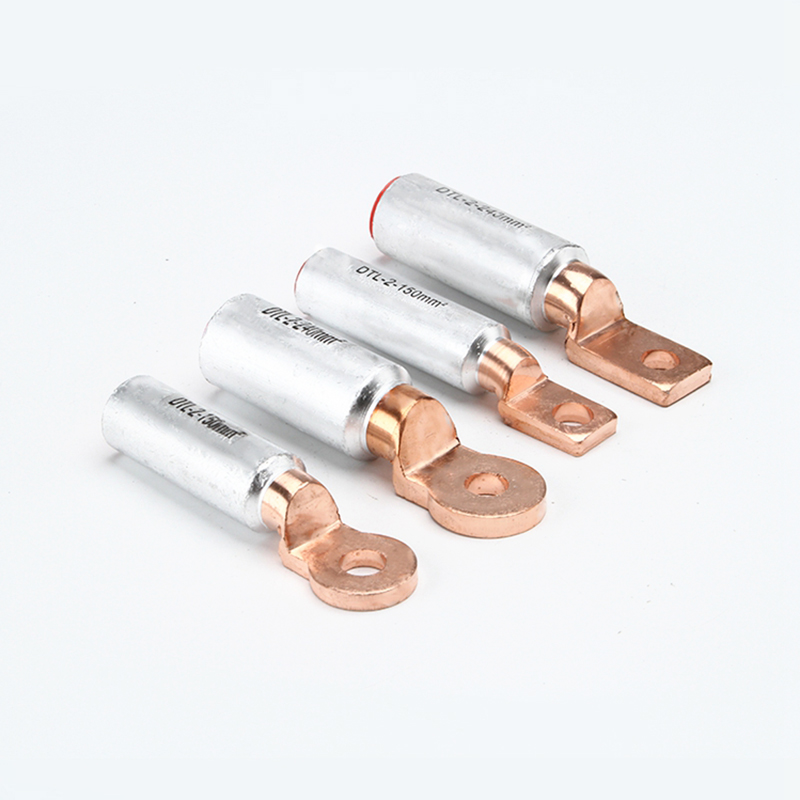
DTLY DTLF Square round head bimetal copper aluminum terminal 2
The performance of a bimetallic cable lug starts with its materials. High-purity metals ensure maximum conductivity and minimal resistance at the joint. Look for lugs that specify electrolytic copper with a minimum purity of 99.9% and aluminum with a minimum of 99.5% . This directly translates to better thermal stability and energy efficiency. The copper should also have high conductivity, ideally meeting the 96% IACS standard .
The connection between the copper palm and the aluminum barrel is the heart of any bimetallic lug. Friction welding is a superior manufacturing technique. It creates a solid-state, molecular-level bond without melting the metals, eliminating voids and brittle intermetallic compounds that can cause failure . Verify that your supplier uses this advanced bonding process for consistent, reliable joints.
Aluminum and copper are a classic galvanic couple; when they come into contact with an electrolyte, the aluminum will corrode. A high-quality bimetallic cable lug prevents this. The barrel is typically pre-filled with a jointing compound and sealed with an end cap . This keeps moisture and oxygen away from the aluminum inside the lug, guaranteeing a long-lasting, corrosion-free connection.
The lug must precisely match the cross-sectional area (mm² or AWG) and conductor class (e.g., stranded, solid, compacted) of your cable . Using the correct size prevents overheating caused by poor contact. The manufacturer’s data sheet will specify the acceptable conductor range, ensuring a secure mechanical and electrical grip . Never cut strands to fit a smaller lug.
Proper installation is non-negotiable. You must use a purpose-designed crimping tool with the correct die and crimp force (e.g., 12-13 Tonne, 25 Tonne) specified by the manufacturer . The number of crimps and their position from the barrel edge is crucial for a proper connection . Also, adhere to the recommended tightening torque for the bolt or stud to avoid a “hot connection” .
To ensure safety and performance, select lugs that meet international standards. Look for compliance with IEC 61238-1, which covers compression and mechanical connectors for power cables, or national codes like IS 1255 . Products designed to meet these standards have been tested for electrical continuity and mechanical strength, providing peace of mind for your project.
The quality of your supplier is as important as the product itself. Consider their operational reliability: do they have a high on-time delivery rate and responsive communication? . For OEM or specialized projects, a supplier offering customization—like different palm hole configurations, tin plating, or specific lengths—can be a significant advantage . Partnering with a reputable manufacturer ensures consistent quality and long-term supply.
| Factor | What to Look For | Why It Matters |
|---|---|---|
| Material Purity | 99.9% Copper, 99.5% Aluminum | Ensures high conductivity and thermal stability for efficient power transfer . |
| Manufacturing Process | Friction Welding | Creates a strong, permanent bond between dissimilar metals, preventing separation and reducing resistance . |
| Corrosion Protection | Pre-filled jointing compound, end cap seal | Prevents galvanic corrosion by keeping moisture and contaminants away from the aluminum barrel . |
| Compliance & Standards | Meets IEC 61238-1 or national equivalents | Guarantees the lug has been rigorously tested for safety and performance in electrical systems . |
Material purity is one of the most critical factors when selecting high-performance cable lugs, especially for copper-aluminum transition applications. Premium-quality products typically use 99.9% high-purity copper and 99.5% high-purity aluminum to ensure optimal electrical and thermal performance.
High-purity copper significantly reduces electrical resistance, enabling efficient current flow and minimizing energy loss during transmission. Meanwhile, high-purity aluminum provides excellent conductivity with lightweight advantages and stable thermal performance under continuous load conditions.
This combination helps improve overall system efficiency, reduce heat generation, and maintain stable performance even in demanding electrical environments.
👉 In summary, higher material purity directly translates into better conductivity, improved thermal stability, and longer service life of electrical connections.
The manufacturing process plays a decisive role in the reliability of bimetallic cable lugs. High-quality products typically adopt friction welding technology to join copper and aluminum components.
Friction welding uses mechanical friction to generate heat, enabling copper and aluminum to bond at a solid-state, molecular level without melting. This process creates a strong metallurgical connection that avoids the formation of brittle intermetallic compounds often found in traditional welding methods.
Key advantages of friction welding include:
👉 Therefore, friction welding is essential for ensuring durable, high-reliability performance in industrial electrical systems.
Corrosion protection is crucial in copper-aluminum electrical connections due to the risk of galvanic corrosion. High-quality cable lugs typically feature pre-filled jointing compound and a sealed end cap design for enhanced protection.
The jointing compound forms a protective barrier at the interface between copper and aluminum, preventing moisture and oxygen from triggering oxidation reactions. This helps maintain low contact resistance over time.
In addition, the end cap seal further prevents the entry of moisture, dust, and other environmental contaminants into the aluminum barrel, ensuring long-term connection stability.
Together, these protective features significantly reduce corrosion risks and extend the operational lifespan of electrical connections, especially in outdoor or harsh industrial environments.
👉 Effective corrosion protection is essential for maintaining reliability in humid, coastal, or chemically aggressive conditions.
Compliance with international standards is a key indicator of product quality and safety in electrical connector applications. IEC 61238-1 is one of the most important global standards for compression and mechanical cable connectors used in power systems.
Products that comply with IEC 61238-1 or equivalent national standards must undergo rigorous testing, including:
These tests ensure that cable lugs maintain stable performance under continuous electrical load and harsh operating conditions without failure or degradation.
A bimetallic cable lug is a connector with a copper palm and an aluminum barrel, specifically designed to terminate aluminum cables to copper busbars or terminals. It creates a secure transition that prevents the galvanic corrosion that occurs when aluminum and copper are in direct contact .
Select a lug based on the cable’s conductor cross-sectional area (mm²). The lug’s manufacturer will have a selection table that matches the cable size to the appropriate lug size and the required crimping die . Your chosen lug must accurately match the cross-sectional area of the cable’s conductor .
The best way is to use a bimetallic connector that is pre-filled with an oxidation-inhibiting jointing compound. This compound creates a barrier that isolates the aluminum and copper from moisture, effectively stopping the electrochemical reaction that causes corrosion .
Choosing the right bimetallic cable lug involves more than just picking a connector from a catalog. By focusing on material purity, a robust friction-welded joint, effective corrosion protection, and strict adherence to installation standards, you secure safe, reliable, and long-lasting electrical transitions.
Are you ready to source high-quality bimetallic cable lugs that meet these exacting standards? ENVI ELEC offers a premium range of connectors designed for performance and safety. Contact us today to find the perfect solution for your next project.

With extensive experience, excellent craftsmanship, and superior customer service, we meet various technical requirements to satisfy our customers and have gained widespread
 Optimized by Seraphinite Accelerator