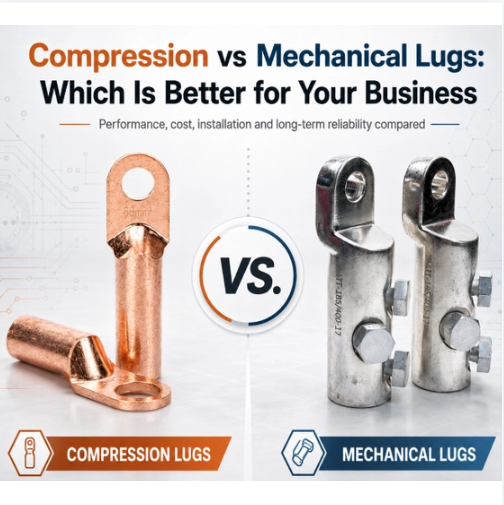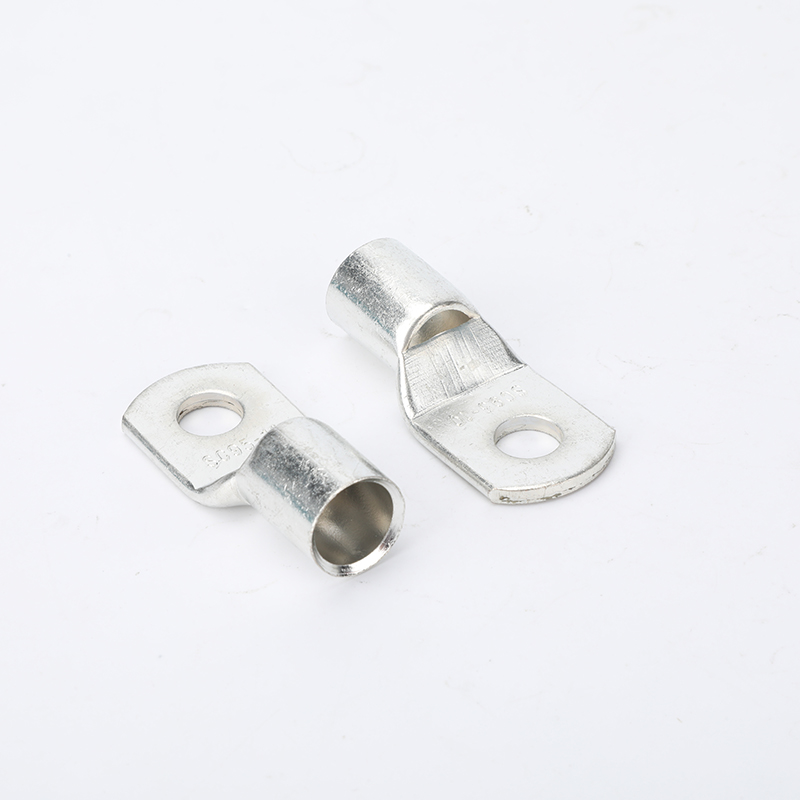


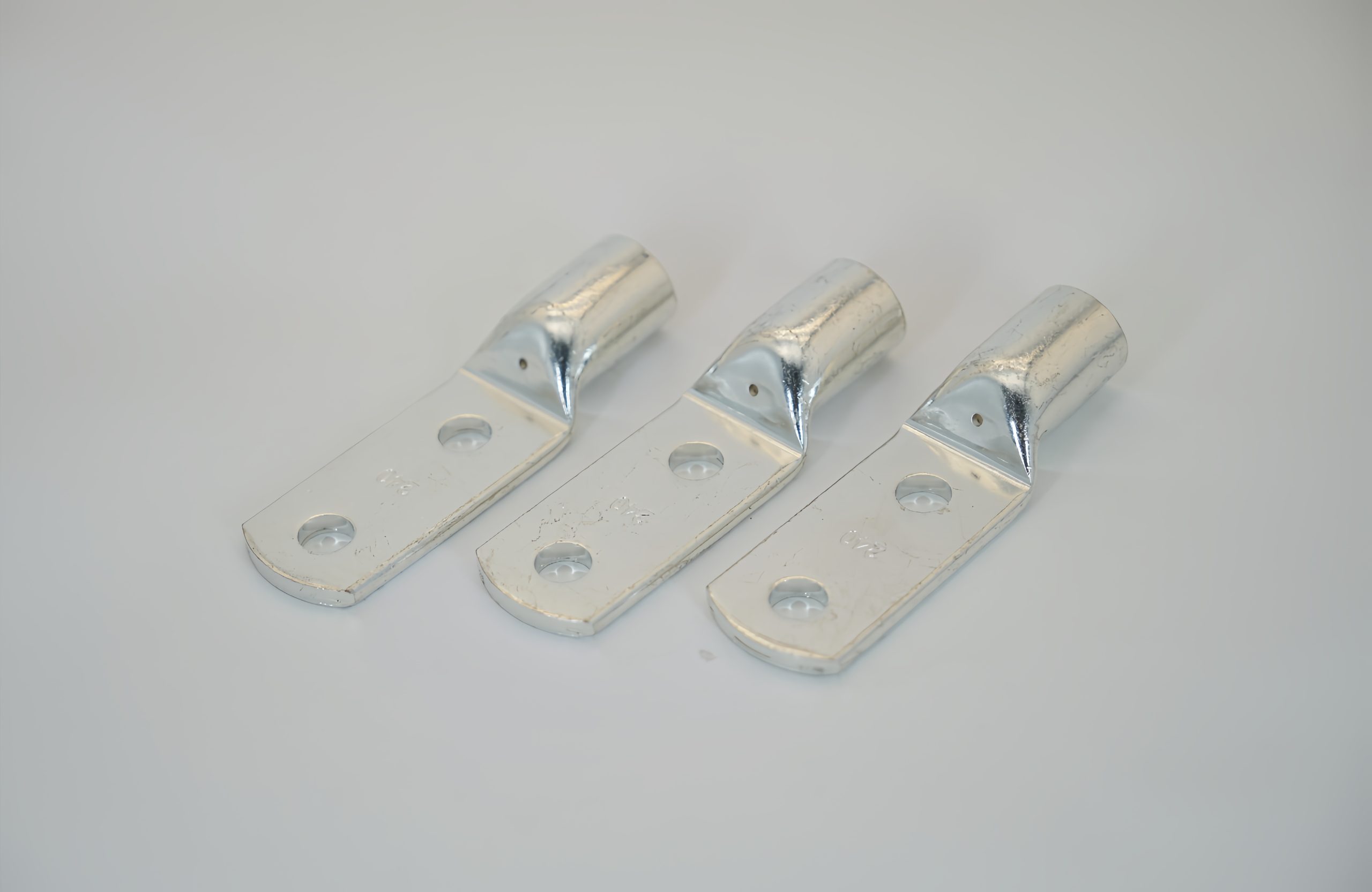
Choosing between standard barrel and long barrel copper terminal lugs is a common challenge for electrical engineers and maintenance professionals. The decision impacts everything from installation time to long-term connection reliability. In simple terms, a standard barrel lug is shorter and designed for general-purpose applications, while a long barrel lug offers a longer crimping area for demanding environments. At ENVI ELEC, we help you navigate these choices to ensure you get the right lug for the job, balancing performance, safety, and cost.
The primary distinction lies in the barrel length, which directly affects the lug’s mechanical pull-out strength and its current-carrying capacity. Standard barrel lugs are commonly used with rigid copper conductors like class 2 stranded wire, while long barrel lugs are particularly recommended for highly flexible cables such as class 5 and 6 fine-stranded conductors, as they provide more surface area for the compression .
The following table summarizes the key differences to help you decide which is right for your application.
| Feature | Standard Barrel | Long Barrel |
|---|---|---|
| Barrel Length | Shorter | Longer |
| Typical Application | Regular-duty, general wiring | Heavy-duty, industrial, high-vibration |
| Mechanical Strength | Good | Superior (more crimps possible) |
| Conductor Type | Ideal for solid/stranded (Class 2) | Ideal for flexible (Class 5/6) |
| Crimp Capacity | 1-2 crimps | 2 or more crimps |
| Space Requirements | Fits in tight spaces | Requires more clearance |
A standard barrel lug is your go-to choice for most routine electrical installations. These lugs are designed for general-purpose terminations where space is at a premium and the conductor is a standard rigid stranded type.
Space Constraints: If your application has limited space, the compact design of a standard barrel lug is a clear advantage . They are often used in crowded junction boxes or control panels where a longer lug simply wouldn’t fit.
Rigid Conductors: For copper conductors like standard building wire (Class 2 rigid stranded), the standard barrel provides more than enough surface area for a reliable crimp .
Cost-Effectiveness: Standard barrels are typically more cost-effective for common applications because they use less material and are sufficient for the job.
For instance, if you are wiring a standard control circuit in a factory, standard barrel lugs are often the practical and economical choice.
Long barrel lugs are the preferred solution for high-performance, demanding electrical applications. Their extended length provides significant advantages in terms of mechanical strength and electrical performance.
Enhanced Mechanical Strength: The longer barrel allows for more than one crimp, which is crucial for applications subject to high vibration or mechanical stress, such as in heavy industrial equipment or transportation systems . Multiple crimps distribute the mechanical load and create a more robust connection.
Flexible Cables (Class 5/6): Fine-stranded, highly flexible cables require a longer barrel to ensure that all strands are fully engaged and secured. A standard barrel may not provide enough length for all the strands to be properly captured, leading to a weak spot .
Increased Pull-Out Strength: The additional crimping area in a long barrel significantly increases the pull-out strength of the connection, making it the reliable choice for critical infrastructure .
A common use case for long barrel lugs is in renewable energy systems, such as solar inverters, where high currents and flexible cables are the norm . The long barrel ensures a secure, low-resistance connection that can withstand thermal cycling and environmental stress.
Q: Does a long barrel lug handle more current?
A: While barrel length itself doesn’t increase a lug’s ampacity, the superior crimp quality it allows ensures a lower and more stable electrical resistance. This results in a more efficient connection, which is especially critical for high-current circuits.
Q: Can I use a long barrel lug in a tight junction box?
A: It is possible, but you must account for the extra length. Long barrel lugs require more clearance. In tight spaces, using a standard barrel or a 45° or 90° bent lug is recommended to maintain proper clearance and prevent stress on the cable .
Q: What are the visual differences between a standard and long barrel lug?
A: The most obvious difference is the overall length and the length of the barrel section. Some manufacturers also use a specific color-coding system to indicate wire size, which is consistent across both barrel types to simplify identification .
Q: Do I need special tools for long barrel lugs?
A: The same standard crimping tool and dies are generally used. The key difference is that you will need to perform additional crimps on a long barrel. Always follow the manufacturer’s recommendations for the number and placement of crimps, such as “first crimp closest to the lug palm” .
Choosing between standard and long barrel copper terminal lugs is a decision based on the specific demands of your application. Standard barrels are perfect for general-purpose, space-limited applications with rigid conductors. Long barrels are essential for heavy-duty, high-vibration environments, and are a must for highly flexible cables where maximum mechanical and electrical reliability is required. Always consider the conductor type, mechanical stresses, and available space to make the correct choice. For a reliable, long-lasting connection, trust ENVI ELEC’s premium selection of copper lugs. Contact us today to find the exact lug for your project requirements.

With extensive experience, excellent craftsmanship, and superior customer service, we meet various technical requirements to satisfy our customers and have gained widespread
 Optimized by Seraphinite Accelerator