

In power engineering, electrical installation, and power distribution construction, GT copper connecting tubes and SC copper terminals are very common copper connectors. They both look like “copper fittings” and often require crimping tools for installation. Therefore, many people new to electrical connection products can easily confuse the two. Actually, the biggest difference between GT and SC is not complicated: one is mainly used for “wire-to-wire” connections, while the other is mainly used for “wire-to-equipment” connections. Below, we will clarify the differences between GT and SC from the aspects of structure, installation method, and practical application.
The most intuitive starting point to understand these two products is their ultimate purpose.
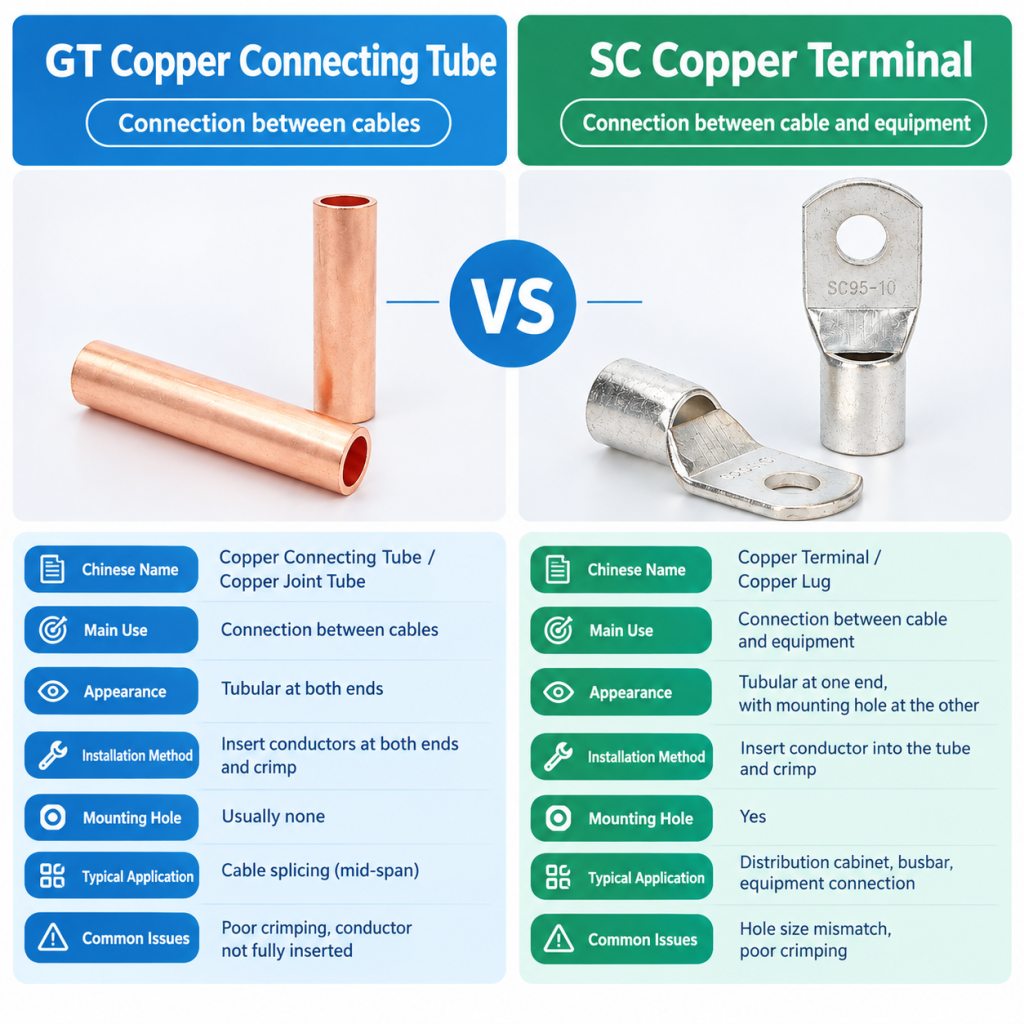
2.1 GT Copper Connecting Tube: The “Cross-Sea Bridge” for Cables GT copper connecting tubes (also called straight-through sleeves, splices, or middle joints in some regions) look like cylindrical copper tubes that are open at both ends (or have a central stop).
Usage Scenario: When a cable is not long enough and needs to be extended, or when the middle of a cable accidentally breaks and needs repair, the GT tube comes into play.
Connection Method: The stripped cable cores of two cables are inserted into the GT tube from opposite ends, and then crimped with a hydraulic crimping tool (usually via hexagonal crimping) to merge the two cable segments into one.
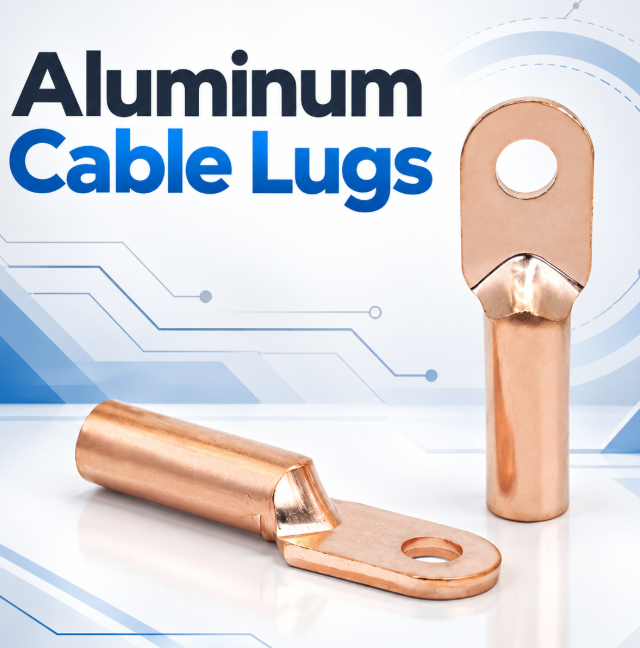
2.2 SC Copper Terminal (Inspection Hole Lug): The “Docking Port” for Cables SC copper terminals (many experienced electricians call them inspection-hole copper cable lugs) feature a shape with “a round tube at one end and a flat head with a hole at the other”. The flat part is called the “Palm”, and the round tube section usually features a small “Inspection hole”.
Usage Scenario: When a cable needs to be connected to the terminals of circuit breakers, busbars, transformers, or other electrical equipment, SC terminals are used to terminate the connection.
Connection Method: One end inserts the cable core into the tube and is crimped tightly (you can verify if the conductor is fully inserted through the inspection hole). The round hole at the other end passes through a bolt and is tightly fastened to the equipment’s conductive busbar with a nut.
Although both can be installed using crimping methods, their structures and purposes are different. To make it easier to remember, here is a simple comparison:
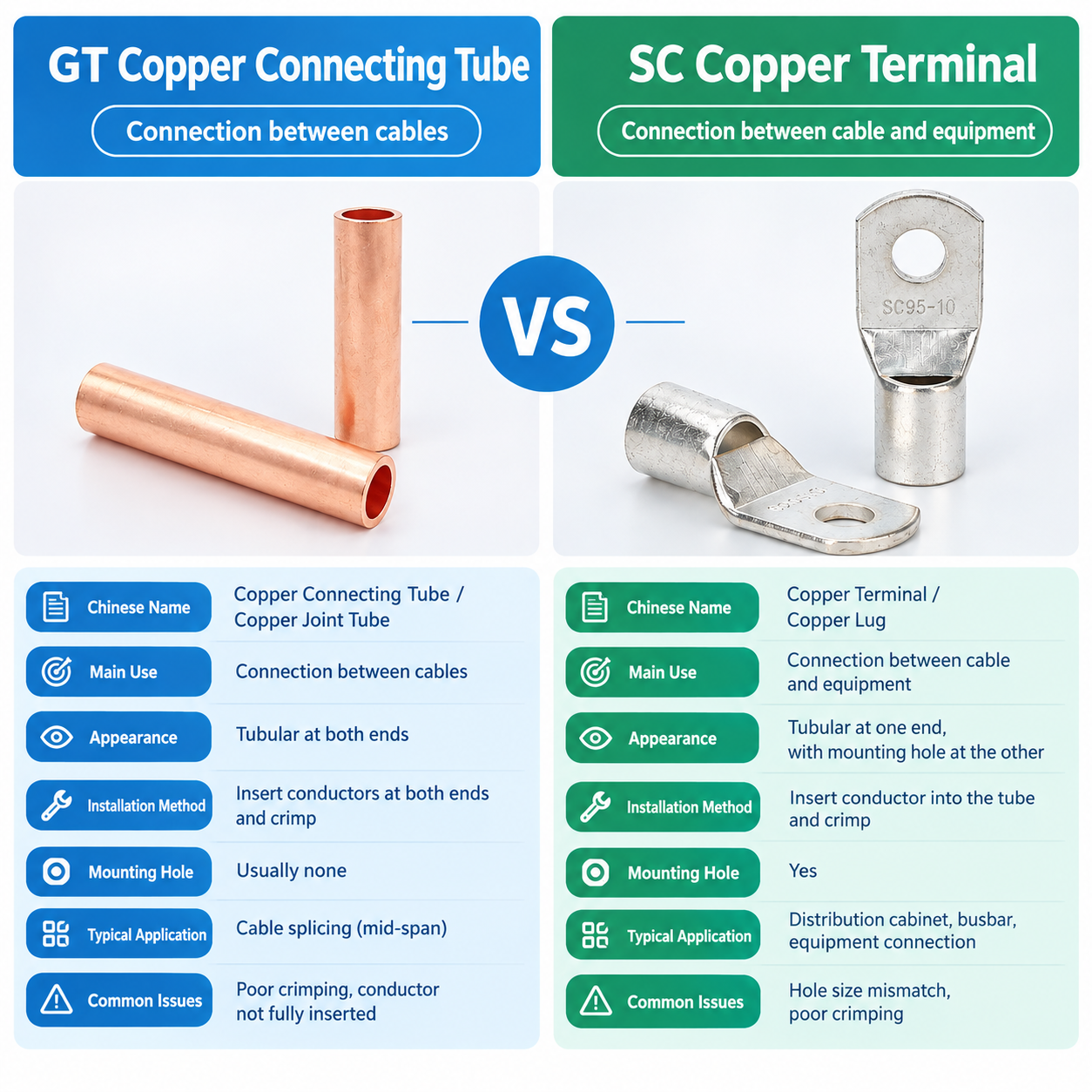
| Comparison Dimension | GT Copper Connecting Tube | SC Copper Terminal |
| Main Function | Cable-to-cable connection (extension/repair) | Wire-to-equipment connection (terminal lead-out) |
| Appearance | Pure straight/cylindrical copper tube | Round tube at the tail + flat head with a bolt hole |
| Installation Method | Insert wires into both ends and crimp | Crimp one end, lock the other end with a bolt |
| Mounting Hole | Usually none | Yes |
| Typical Application | Cable middle splicing | Distribution cabinets, busbars, equipment wiring |
| Common Problems | Unsecure crimping, conductor not fully inserted | Mismatched hole diameter, unsecure crimping |
Many people struggle with whether GT or SC is better when purchasing. Actually, this question itself is inaccurate. They serve different functions, so there is no simple “which is better”. The key is your connection requirement.
When Two Cables Need to be Spliced
For example, if two 95 mm² copper cables need to be connected in a straight line, you generally need to select a GT copper connecting tube with the corresponding cross-sectional area specification. If you choose an SC copper terminal in this scenario, you cannot directly complete the straight-line crimped connection between the two cables like you can with a GT.
When a Cable Needs to Connect to a Busbar or Equipment
For example, if a 95 mm² copper cable needs to be wired into a distribution cabinet busbar, you would typically choose the SC95 series or other compliant copper crimping terminals, and select the appropriate mounting hole size based on the actual bolt dimensions. In this case, GT cannot simply replace SC because GT lacks the copper palm and mounting hole required for bolt fixation.
Whether it’s GT or SC, although simple in structure, they bear the heavy responsibility of carrying large currents throughout the electrical system. Cutting corners on materials and manufacturing processes can easily lead to increased contact resistance, overheating, and even fire. When purchasing for daily use, there are several professional criteria to assess:
Check Material Purity: High-quality connecting tubes and terminals must be made of T2 pure copper (copper content over 99.9%). Pure copper has high electrical conductivity and excellent ductility, making it less prone to micro-cracks when subjected to large-tonnage hydraulic crimping.
Check Surface Treatment: To prevent the copper from oxidizing and rusting in the air, reputable manufacturers usually apply tin plating (matte or bright) to the surface. Tin-plated terminals appear silvery-white, which not only provides corrosion resistance but also further reduces contact resistance.
Check Dimensions and Standards: Cables of different cross-sectional areas (e.g., 16mm², 35mm², 120mm²) must strictly correspond to terminals of matching specifications. The thickness, tube diameter, and bolt hole size should all comply with national standards (such as GB/T 14315) or International Electrotechnical Commission guidelines (IEC 61238-1). “Non-standard” products that cut corners often feature thin walls and are highly susceptible to loosening after crimping.
For quick memorization, GT and SC can be simply understood as:
GT — mainly used for “wire-to-wire”, meaning the connection between two cables or conductors.
SC — mainly used for “wire-to-equipment”, meaning the connection between a cable and a busbar, switchgear, transformer, or other electrical devices. One acts more like a “connecting splice” between cables, while the other acts more like a “copper cable lug” for connecting cables to equipment.
Of course, during actual procurement, you shouldn’t just look at the model names. You also need to confirm key parameters such as cable cross-sectional area, inner diameter, length, mounting hole size, copper material, surface treatment, and required crimping tools. Especially for bulk purchasing or OEM projects, it is always best to strictly follow official drawings and technical specifications.

With extensive experience, excellent craftsmanship, and superior customer service, we meet various technical requirements to satisfy our customers and have gained widespread
 Optimized by Seraphinite Accelerator