
Choosing the wrong plating for a square terminal lug can turn a reliable heavy-duty busbar connection into a long-term maintenance problem. In switchgear, transformer terminals, distribution boards, and renewable-energy inverters, the joint between cable and busbar must stay electrically stable and mechanically secure for decades. That stability depends heavily on whether the copper lug is finished with tin or silver.
At ENVI ELEC, we have spent nearly 30 years manufacturing cable lugs and electrical power fittings. Our SC tinned copper terminal cable lugs are produced from T2 copper tube, tin-plated, and tested to GB/T 14315-2008 and IEC 61238-1. In this guide, we compare tinned copper vs. silver-plated square terminal lugs across material structure, electrical performance, corrosion resistance, current capacity, and cost so you can specify the right part for your next busbar project.
Both lug types start with the same base metal: high-conductivity copper. The difference is the protective and conductive surface layer applied before the lug reaches your panel. That layer determines how the connection behaves under current, heat, humidity, and chemical exposure.
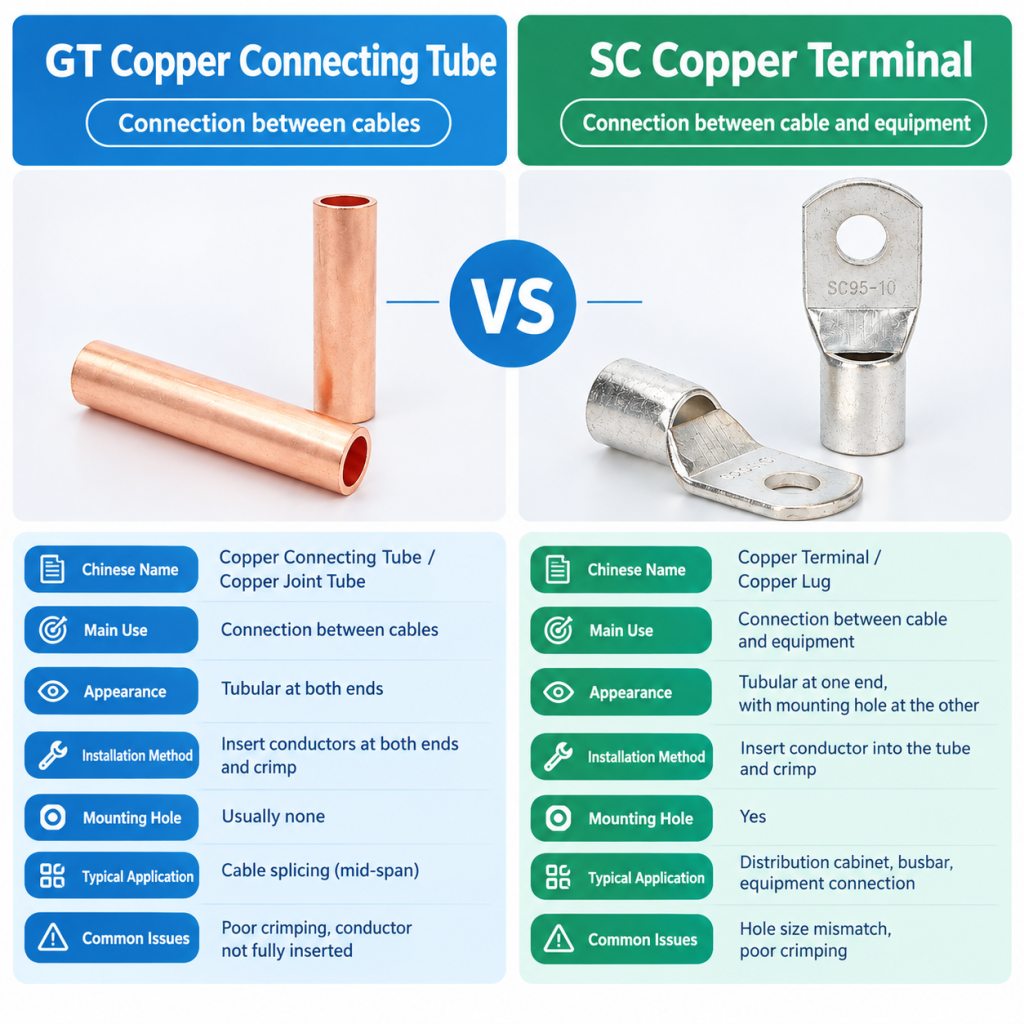
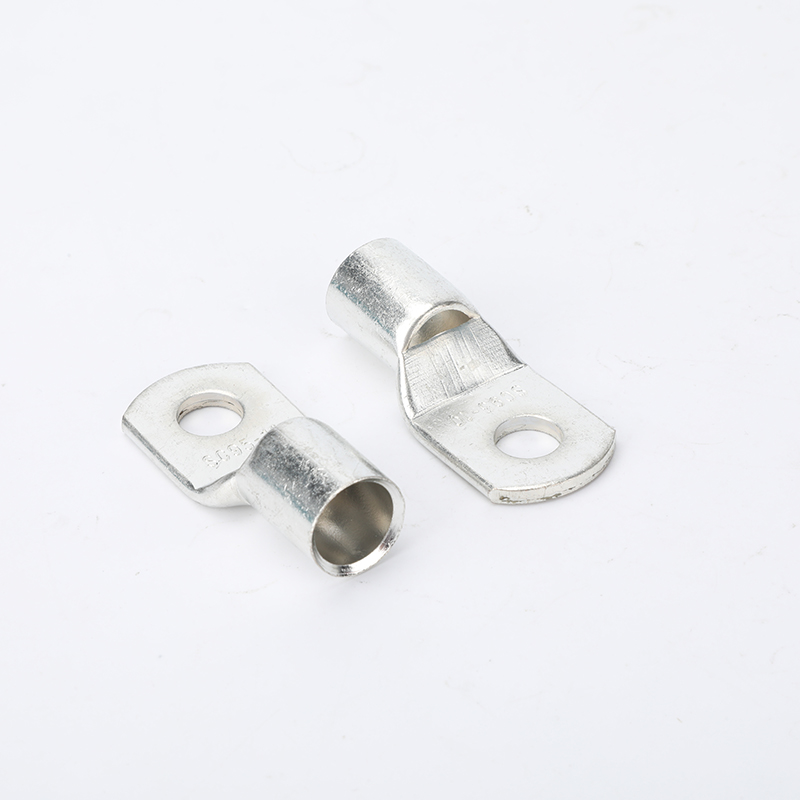
A square terminal lug is essentially a copper tube with a flat palm, or “square,” at one end. The palm has a mounting hole for bolting to a busbar or equipment terminal, while the barrel is crimped onto the conductor.
The tin coating is primarily a corrosion barrier. It protects the underlying copper from oxidation and provides a solderable surface if secondary wiring work is needed. Silver, by contrast, is chosen mainly for its electrical properties, although it also resists oxidation under normal indoor conditions.
206A4954
Silver has the highest electrical conductivity of any metal, roughly 6% more conductive than copper and significantly better than tin oxide. In a bolted busbar joint, that means a silver-plated interface can deliver slightly lower contact resistance and less localized heating at very high current densities.
Tin-plated joints also perform well in power distribution. The native tin oxide layer is thin and semiconductive, so it does not insulate the joint the way aluminum oxide does. Once the joint is crimped and torqued correctly, the oxide is disrupted and the connection remains stable. For most industrial busbar applications up to their rated current, the difference in bulk conductivity between tin and silver is marginal compared with the influence of crimp quality and bolt torque.
Environment is usually the deciding factor between tin and silver plating.
If your busbar connection will face humidity, salt, dust, or chemical vapor, tinned copper is usually the safer choice. If the environment is clean, dry, and temperature-controlled, silver plating can provide a measurable edge in conductivity.
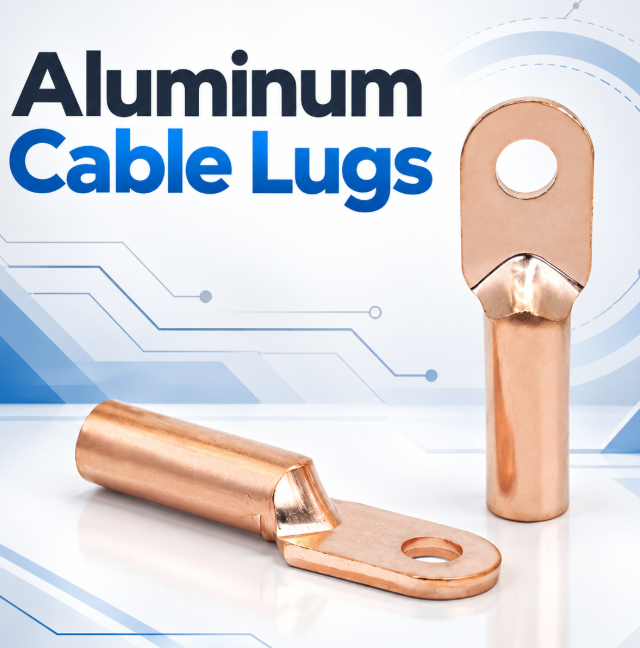
The continuous current rating of a square terminal lug is determined mainly by the copper cross-section, not the plating. An DT copper terminal cable lug or SC-series lug sized for 120 mm² cable will carry approximately the same nominal current whether it is tinned or silver-plated, provided the installation follows the manufacturer’s crimp and torque specifications.
Where plating matters is at the joint interface:
For normal heavy-duty busbar duty at rated current and within the lug’s temperature class, both platings are thermally adequate. Silver becomes advantageous when current density, short-circuit exposure, or operating temperature push the joint toward its upper limits.
Silver plating adds material and processing cost. Depending on thickness, order volume, and market silver price, silver-plated square terminal lugs can cost two to five times as much as their tinned equivalents. For projects that need thousands of lugs, that gap is significant.
The right approach is to specify silver only where its electrical or thermal benefits justify the premium, and to use tin everywhere else. A common B2B strategy is to require silver plating for critical high-current joints, control rooms, and HV terminations, while using tin-plated lugs for general distribution, outdoor feeders, and cost-sensitive installations.
Need Square Terminal Lugs for Your Busbar Project?
ENVI ELEC manufactures tinned copper and silver-plated square terminal lugs from 6 mm² to 630 mm². Share your current, environment, and busbar details and our engineers will recommend the right plating and size.
Selecting a square terminal lug for a busbar is a four-step process. Skipping any step can lead to oversized budgets, overheated joints, or premature corrosion.
Start with the conductor size and the continuous current. Match the lug barrel to the cable cross-section; do not force a 95 mm² cable into a 70 mm² barrel. Then confirm the short-circuit withstand of the joint if the application involves motor starting, capacitor banks, or transformer feeders.
ENVI’s SC series covers 6 mm² to 630 mm² and continuous ratings from 50 A to 1200 A. If your drawing specifies a particular palm-hole size or bolt diameter, verify that the lug palm matches the busbar drilling pattern. A loose or oversized hole increases contact resistance and can loosen under vibration.
Ask the same questions you would ask when selecting any outdoor electrical component:
If any answer points to moisture, salt, or sulfur, lean toward tinned copper. If the environment is clean, dry, and thermally controlled, silver plating is a valid high-performance option.
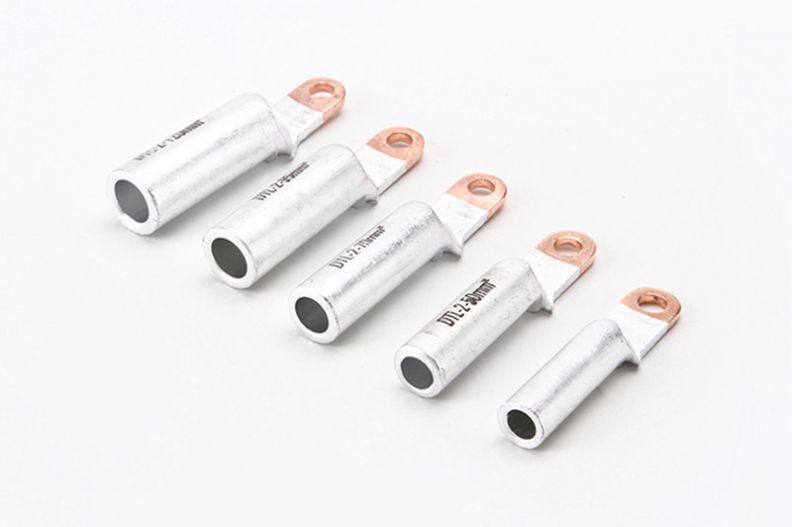
Copper lugs bolt directly to copper busbars with compatible hardware. If the busbar is aluminum, however, a direct copper-to-aluminum interface invites galvanic corrosion. In that case, use a bimetallic cable lug that provides a copper barrel for the cable and an aluminum palm for the busbar, breaking the galvanic couple.
Also confirm bolt torque. Under-torquing creates high-resistance joints; over-torquing deforms the palm and can crack plating. Follow the lug manufacturer’s torque table and use calibrated tools.
Use a simple decision matrix to finalize the plating choice:
| Selection Factor | Tinned Copper Lug | Silver-Plated Lug |
|---|---|---|
| Best Environment | Humid, marine, outdoor, industrial | Clean, dry, controlled indoor air |
| Contact Resistance | Low after proper crimp/torque | Very low, best for high current density |
| Corrosion Risk | Resists oxidation and salt | Can tarnish in sulfur-rich air |
| Temperature Limit | Typically up to 150℃ | Higher stability, >200℃ |
| Relative Cost | Economical, ideal for volume | Premium, 2–5× tinned cost |
When the application is ordinary heavy-duty power distribution with occasional humidity or temperature cycling, tinned copper is the practical default. When the joint is critical, high-current, high-voltage, or thermally stressed, the premium for silver plating is usually justified.
No. Many high-voltage switchgear and transformer connections use tin-plated lugs successfully. Silver plating is specified when the design requires the lowest possible contact resistance, high-temperature stability, or minimal maintenance in clean environments. Always follow the equipment manufacturer’s termination specification.
Tin itself oxidizes only very slowly and forms a stable, passivating oxide film. The underlying copper is protected as long as the tin layer remains intact. Tinned copper is therefore a standard choice for humid, marine, and outdoor electrical installations.
Silver-plated square terminal lugs typically cost two to five times more than tinned equivalents, depending on silver thickness, order quantity, and current commodity prices. For large projects, the cost difference is often the deciding factor outside of specialized applications.
The continuous current rating is governed primarily by the copper cross-section and the installation quality. Plating becomes relevant at the joint interface under high current density or thermal stress. If the joint runs near its upper current limit, experiences frequent overloads, or requires the lowest contact resistance, choose silver. For standard rated current, tin is sufficient.
Direct copper-to-aluminum contact should be avoided because moisture and galvanic potential can corrode the aluminum. Use a bimetallic transition lug with a copper barrel and aluminum-compatible palm, or apply an approved joint compound and sealing method per the relevant standard.
Most tinned copper lugs are rated up to 150℃ continuous operation. Silver-plated lugs remain stable at higher temperatures, often exceeding 200℃, because silver does not soften or flow the way tin can. Always confirm the exact temperature class on the manufacturer’s data sheet.
Tinned copper and silver-plated square terminal lugs both deliver reliable heavy-duty busbar connections when they are matched to the right environment and current duty. Tinned copper is the durable, cost-effective choice for humid, outdoor, and industrial installations. Silver-plated lugs offer lower contact resistance and higher thermal stability for critical indoor joints and high-current-density applications.
The best specification is not automatically the most expensive one. It is the one that balances electrical performance, environmental protection, busbar compatibility, and total cost. If you need support selecting the right plating, size, or standard for your project, ENVI ELEC can review your drawings and recommend a lug solution from our cable lug range.
Request a Free Technical Consultation
Tell us your busbar material, current rating, and environment. Our team will recommend tinned or silver-plated square terminal lugs and provide a competitive quotation.
Recommend Products

With extensive experience, excellent craftsmanship, and superior customer service, we meet various technical requirements to satisfy our customers and have gained widespread
 Optimized by Seraphinite Accelerator