
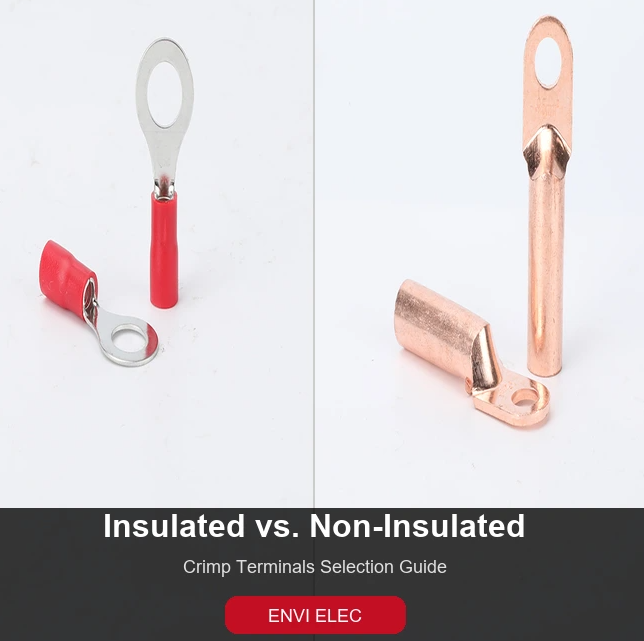
Selecting the right crimp terminal is one of the most critical decisions in electrical system design. Whether you are wiring a control panel, assembling an automotive harness, or terminating power cables in industrial equipment, the choice between insulated crimp terminals and non-insulated crimp terminals directly impacts safety, reliability, and long-term performance.
This guide provides a practical, side-by-side comparison of insulated and non-insulated crimp terminals, covering their structural differences, installation requirements, cost implications, and real-world application scenarios. By the end, you will have a clear framework for making informed procurement decisions that align with your project’s technical and budgetary constraints.
Crimp terminals (also called cord end terminals, ferrules, or lugs) are metal connectors that are mechanically attached to wire ends using a crimping tool. They provide a secure, low-resistance connection between a conductor and a terminal block, stud, or other electrical component.
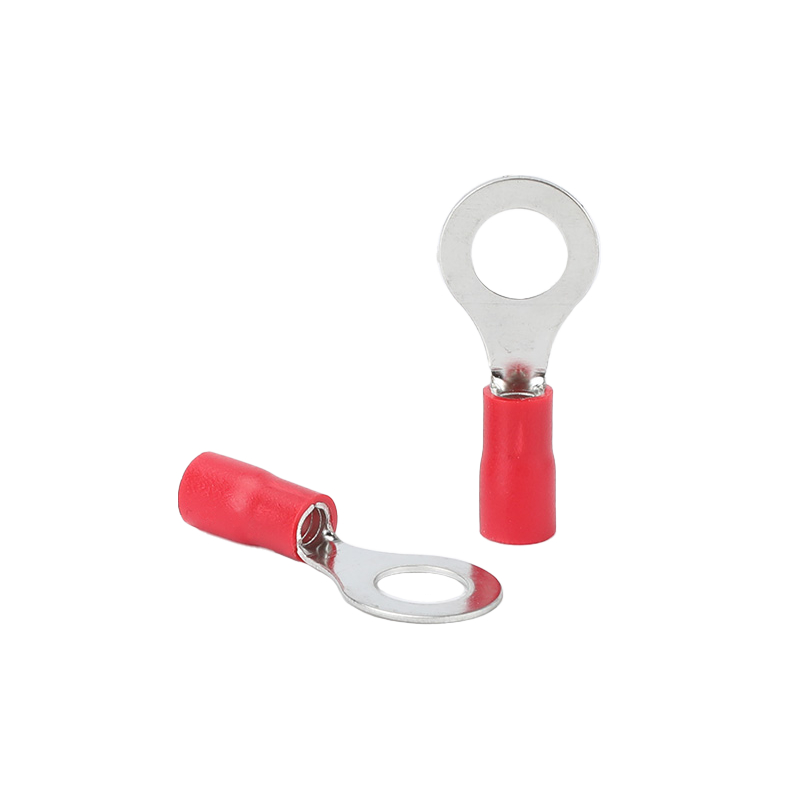
Insulated crimp terminals feature a metal barrel (typically tinned copper or brass) encased in a protective insulation sleeve—usually made of PVC, nylon, or polyolefin. The insulation is color-coded according to wire size standards (red for 0.5–1.5 mm², blue for 1.5–2.5 mm², yellow for 4–6 mm²) and serves as both a visual gauge and an electrical barrier.
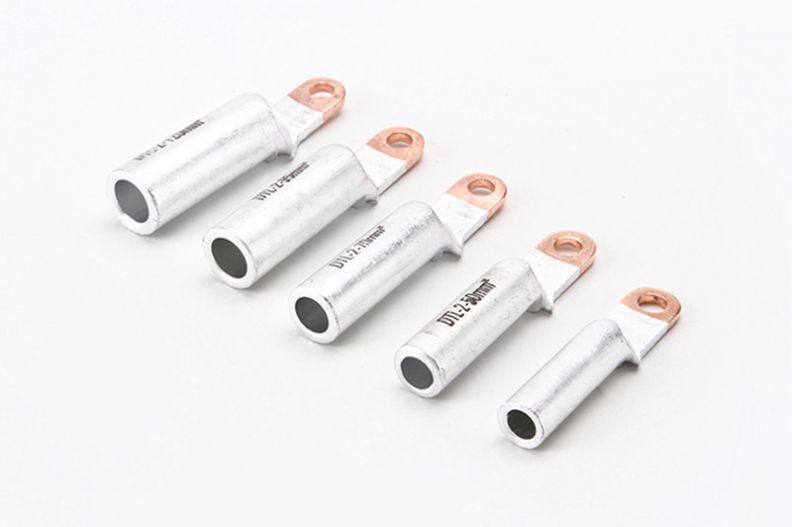
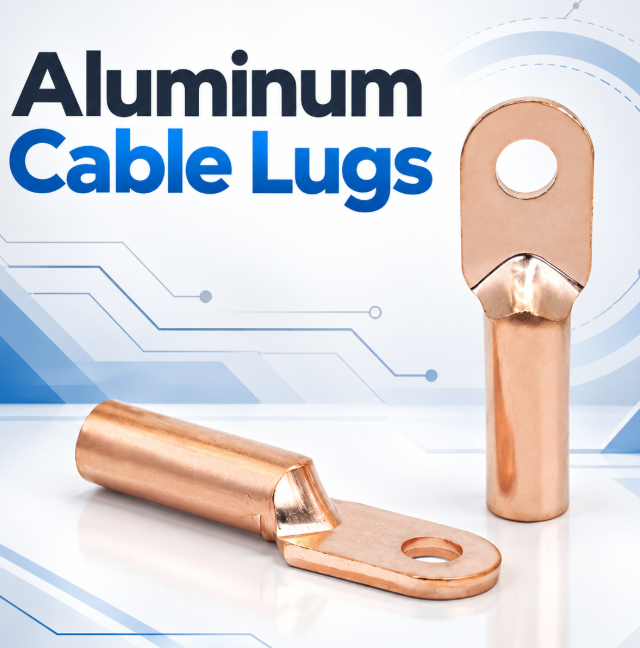
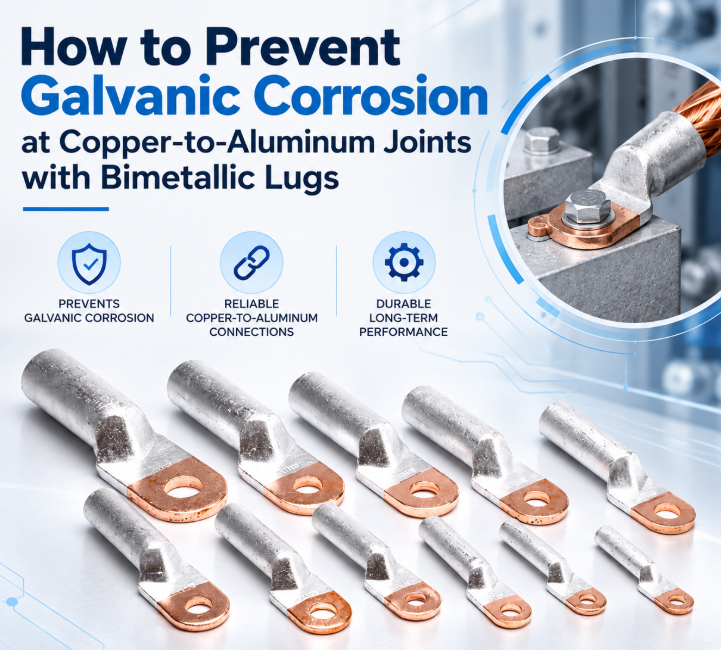
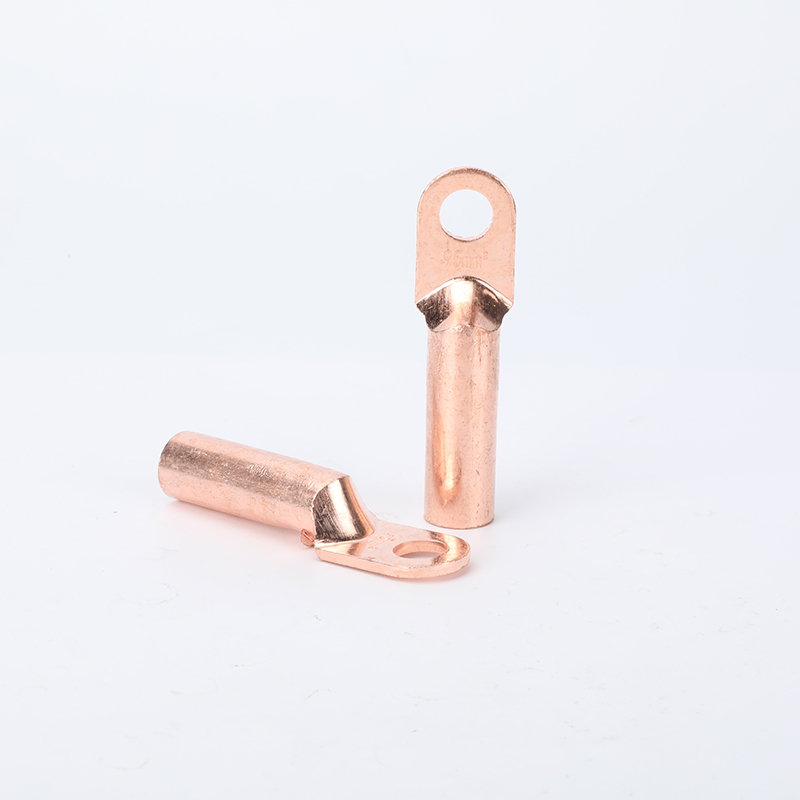
Non-insulated crimp terminals (also called bare terminals or naked lugs) consist solely of the metal barrel and tongue/ring portion without any external coating. They are typically made from electrolytic copper, tin-plated copper, or bimetallic copper-aluminum alloys, and are designed for applications where additional insulation is either unnecessary or provided by other means (such as heat shrink tubing, barrier tape, or the enclosure itself).
At ENVI ELEC, we manufacture both categories to international standards including IEC 61984 and GB/T 13140.1, ensuring consistent quality across our crimp terminals product line.
The most significant functional difference lies in electrical isolation:
| Aspect | Insulated Crimp Terminals | Non-Insulated Crimp Terminals |
|---|---|---|
| Electrical Isolation | PVC/nylon sleeve prevents accidental contact with live metal; rated for up to 600V in most configurations | No built-in isolation; exposed metal requires secondary insulation or enclosed mounting |
| Short-Circuit Risk | Low — insulation acts as a dielectric barrier between adjacent terminals | Higher in dense wiring — requires careful spacing or sleeving |
| Vibration Resistance | Insulation adds a cushioning layer that reduces fretting corrosion under vibration | Direct metal-to-metal contact; may require locking hardware in high-vibration environments |
| Touch-Safe Rating | Generally touch-safe when properly crimped (IP20 minimum) | Not touch-safe; must be housed within an enclosure or covered |
For general-purpose low-voltage wiring in accessible locations, insulated ring terminals like the RV Series are the default choice for safety-conscious installations.
Insulation adds physical bulk. A typical RV1.25-4 insulated ring terminal has an overall length of approximately 20 mm, whereas its non-insulated counterpart (RNB type) measures roughly 12–14 mm—a difference of 30–40% in occupied space.
In space-constrained applications such as compact terminal blocks, motor junction boxes, or densely packed control panels, non-insulated terminals can be the only viable option. However, this space advantage comes at the cost of requiring external insulation management.
This is where non-insulated terminals hold a decisive advantage:
If your application involves sustained temperatures above 105°C, non-insulated copper tube lugs (DT Series) paired with high-temperature sleeving or ceramic beads are the industry-standard solution.
💡 Pro Tip: For applications between 75°C and 150°C, consider using non-insulated terminals with heat shrink tubing featuring an inner adhesive lining. This hybrid approach provides both temperature resilience and post-installation environmental sealing. Contact ENVI ELEC →
The crimping methodology differs noticeably between the two types:
Insulated terminals use color-coded dies that match the insulation color (red/blue/yellow). The die profile compresses both the metal barrel and the insulation sleeve simultaneously, creating a strain-relieved grip. Most hand-operated ratchet crimpers (such as HSC8 6-6 or JX-06 series) handle the full range from 0.5 mm² to 6 mm² with interchangeable dies.
Non-insulated terminals require bare-metal dies that apply higher crimp force directly to the copper barrel. For larger sizes (above 10 mm²), hydraulic or battery-powered crimping tools become necessary. The absence of insulation means the crimp quality is fully visible—an advantage for inspection but also means there is no margin for error in die selection.
| Cost Factor | Insulated | Non-Insulated |
|---|---|---|
| Unit Price (per 1,000 pcs, 2.5mm²) | $15 – $35 | $8 – $20 |
| Additional Materials Needed | None (self-contained) | Heat shrink, sleeves, or tape ($0.02–$0.08/pc) |
| Labor per Termination | ~15 seconds (single-step crimp) | ~25–40 seconds (crimp + insulate) |
| Total Installed Cost | Lower for high-volume, standard-temp projects | Lower for large-gauge / high-temp applications |
The cost equation shifts based on volume, wire size, and operating environment. For bulk orders of insulated spade, ring, and pin terminals, ENVI ELEC offers competitive OEM/ODD pricing with MOQ as low as 1,000 pieces per SKU.
Follow this four-step decision framework to match the correct terminal type to your specific application:
Ask three questions:
Always verify the cross-sectional compatibility between your conductor and the terminal barrel. Undersized barrels cause loose connections and resistive heating; oversized barrels result in poor strand capture and pull-out failure. Refer to the manufacturer’s dimension table (e.g., RV Series specifications) for exact AWG/mm² ranges per catalog number.
If your application requires periodic visual inspection of crimp quality (aerospace, rail traction, medical equipment), non-insulated terminals allow direct observation of the crimp zone. Insulated terminals hide the metal deformation, requiring pull-testing or cross-section analysis for verification.
Need Help Selecting the Right Terminal?
ENVI ELEC manufactures both insulated and non-insulated crimp terminals to IEC & GB standards. Get a free technical consultation for your project.
Q1: Are non-insulated terminals better for high-temperature applications?
A: Yes. Non-insulated terminals made from bare electrolytic copper or tin-plated copper can operate continuously at temperatures exceeding 200°C, whereas standard PVC-insulated terminals are limited to approximately 75°C. For high-temperature motor terminations, transformer connections, or heating element wiring, non-insulated copper tube lugs are the recommended choice. Always pair them with appropriate high-temperature insulation (fiberglass sleeve, ceramic bead, or heat shrink with a high temp rating).
Q2: Do insulated terminals provide better electrical performance?
A: Not necessarily. The electrical performance—measured by contact resistance, current-carrying capacity, and voltage drop—is determined primarily by the metal barrel material (copper conductivity, plating quality, crimp density) rather than the presence of insulation. In fact, non-insulated terminals often exhibit slightly lower contact resistance because the full barrel surface is available for conduction without any insulating layer interference. The key advantage of insulated terminals is safety and convenience, not superior electrical metrics.
Q3: Can non-insulated terminals be used with heat shrink tubing?
A: Absolutely—and this is one of the most common and effective practices in industrial wiring. Dual-wall heat shrink tubing with an inner thermoplastic adhesive layer provides excellent environmental sealing, vibration dampening, and a degree of touch protection. This combination gives you the temperature rating of a bare terminal plus the protection of an insulated one. Ensure the heat shrink ID matches the terminal’s outer diameter after crimping, and use a controlled heat gun (not an open flame) for consistent shrinkage.
Q4: What is the difference between pre-insulated and post-insulated terminals?
A: Pre-insulated terminals (like ENVI ELEC’s RV Series and SV Series) come from the factory with the insulation already molded onto the metal barrel. Post-insulated refers to applying heat shrink, sleeving, or taping over a non-insulated terminal after crimping. Pre-insulated is faster and more consistent for mass production; post-insulated offers flexibility for custom lengths, retrofits, and extreme-environment sealing.
Q5: How do I choose between ring tongue and spade (fork) terminals?
A: Ring tongue terminals (RV/RNB) require the mounting stud to be fully removed during installation, which makes them more secure against vibration loosening but slower to assemble. Spade/fork terminals (SV/SNV) can slide under a screw head without removing it, speeding up assembly but offering less retention under severe vibration. For stationary panels and control cabinets, spade terminals are often preferred for maintenance efficiency. For automotive, aerospace, or mobile equipment, ring terminals are the safer choice.
Q6: Can I use insulated terminals in outdoor or wet environments?
A: Standard PVC-insulated terminals offer limited moisture resistance and are not recommended for direct outdoor exposure or submerged applications. For wet or outdoor environments, choose nylon-insulated terminals (better UV and moisture resistance) or use non-insulated terminals with adhesive-lined heat shrink tubing and appropriate IP-rated enclosures. Always verify the IP rating required for your specific installation per IEC 60529.
Q7: What wire size range do insulated vs. non-insulated terminals cover?
A: Insulated crimp terminals typically cover the fine-to-medium wire range of 0.5 mm² to 6 mm² (approximately 20–10 AWG). For heavier conductors from 6 mm² up to 630 mm², non-insulated copper cable lugs (DT, SC, DTL series) are the standard solution, as the insulation would be impractically thick at those gauges. Some manufacturers offer “large-gauge insulated” options up to 16 mm², but these are niche products.
Choosing between insulated and non-insulated crimp terminals is not about which type is universally better—it is about matching the terminal’s characteristics to your application’s demands. Use insulated crimp terminals when you need touch safety, fast single-step installation, and operation within standard temperature ranges. Opt for non-insulated crimp terminals when facing high temperatures, space constraints, large-gauge conductors, or when you need full visual access to the crimp joint for quality assurance.
At ENVI ELEC, we manufacture a comprehensive range of both insulated and non-insulated terminals—from RV/SV insulated ring and spade terminals to DT/SC/DTL bare copper lugs—all produced under strict quality control with T2 electrolytic copper and compliant with IEC 61984 and GB/T 13140.1 standards. Whether you need standard off-the-shelf products or custom-engineered solutions, our team is ready to support your project.
Ready to Source Quality Crimp Terminals?
20+ years of metal processing experience. OEM & ODM supported. MOQ from 1,000 pcs.
Related Resources

With extensive experience, excellent craftsmanship, and superior customer service, we meet various technical requirements to satisfy our customers and have gained widespread
 Optimized by Seraphinite Accelerator